By Robert R.
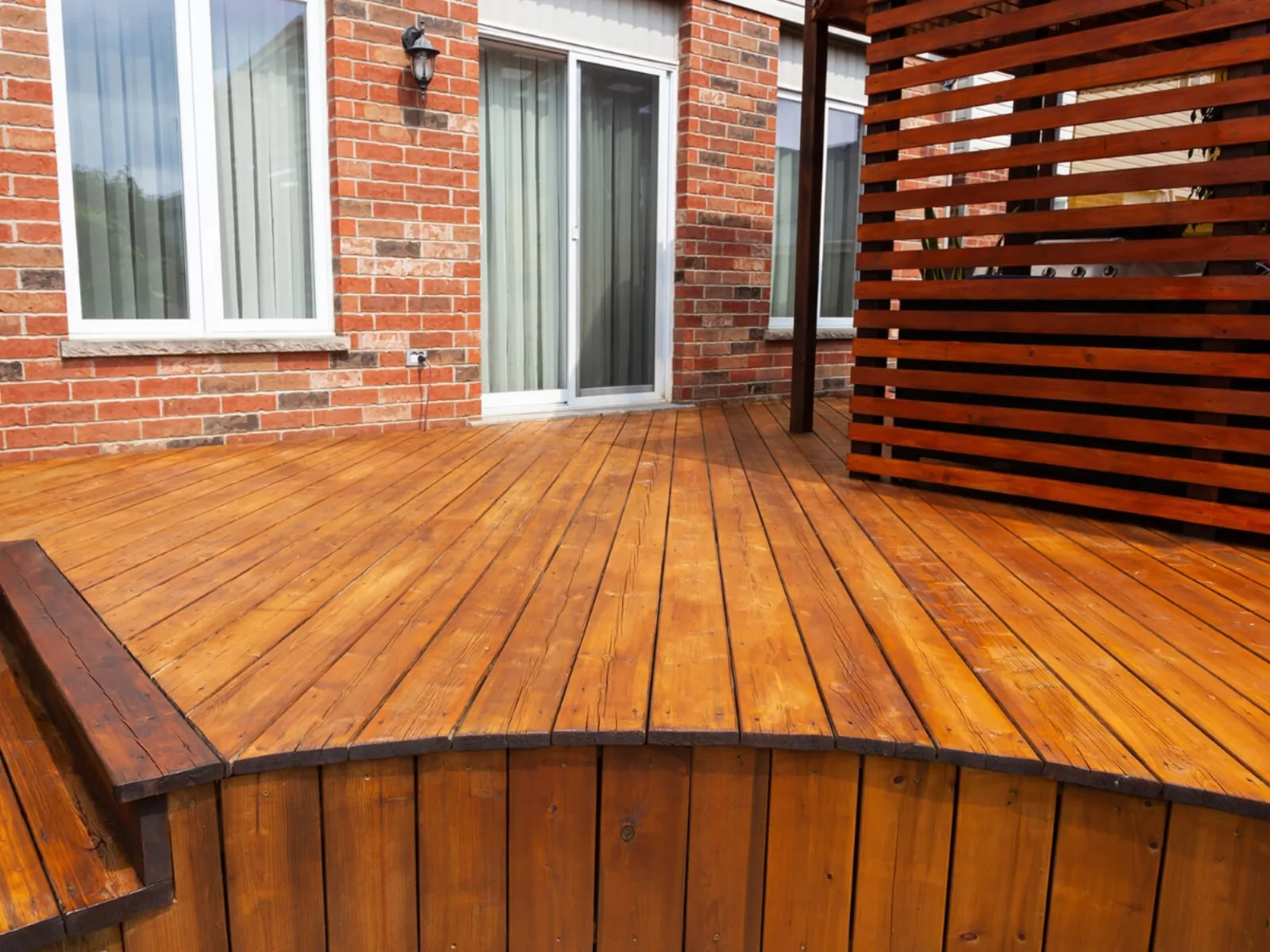
The best deck stains are deep-penetrating alkyd-modified oils and high-solids semi-transparent acrylics that soak into the wood fibers instead of sitting on top of them. That distinction is the whole game: penetrating stains wear away gradually and recoat cleanly, while film-forming coatings crack and peel under foot traffic and take a full strip to fix.
Quick Reference: Choosing a Deck Stain
- Best penetrating choice: non-drying paraffin oil stains or alkyd-modified resins that soak into the wood cells.
- Best for aged wood: semi-solid or solid acrylics that hide grain discoloration and give maximum UV shielding.
- Best for exotic hardwoods: clear sealers or ultra-transparent oils carrying micronized transoxide iron pigments.
- The rule that matters: keep cheap film-forming clear coats off horizontal walking surfaces, because films crack under traffic.
Climate sets the maintenance cycle. Humid Southern coastal decks face high moisture and intense UV that break stain down faster. Dry Western sun fades pigment and opens grain. Northern freeze-thaw drives water into checked boards and lifts anything that formed a film.
Oil-Based vs Water-Based Acrylic Deck Stains
The choice comes down to resin binder, solvent carrier, and how the stain dries. Wood finishing guidance from the Forest Products Laboratory is the technical baseline for how coatings behave on exterior lumber.
Oil-based stains — alkyd, linseed, or tung — have small molecules that penetrate deep into porous cell walls. They condition the lumber, repel liquid water, and wear away gradually rather than peeling, which makes recoating straightforward.
Water-based acrylics use larger polymer resins that dry fast and hold color well. Modern acrylic-alkyd hybrids give strong UV resistance and soap-and-water cleanup, but they sit closer to the surface, so surface prep matters more.
Before you start, check any stain cans left over from previous seasons using our guide on whether you can use old paint.
“Pro tip: a clear sealer with no pigment offers essentially zero UV protection, and unprotected wood lignin breaks down under sunlight within a season. Pigment is the sunscreen. If you want the grain visible, use a transparent stain carrying transoxide pigments rather than a true clear.”
Best Deck Stains for Pressure-Treated Wood
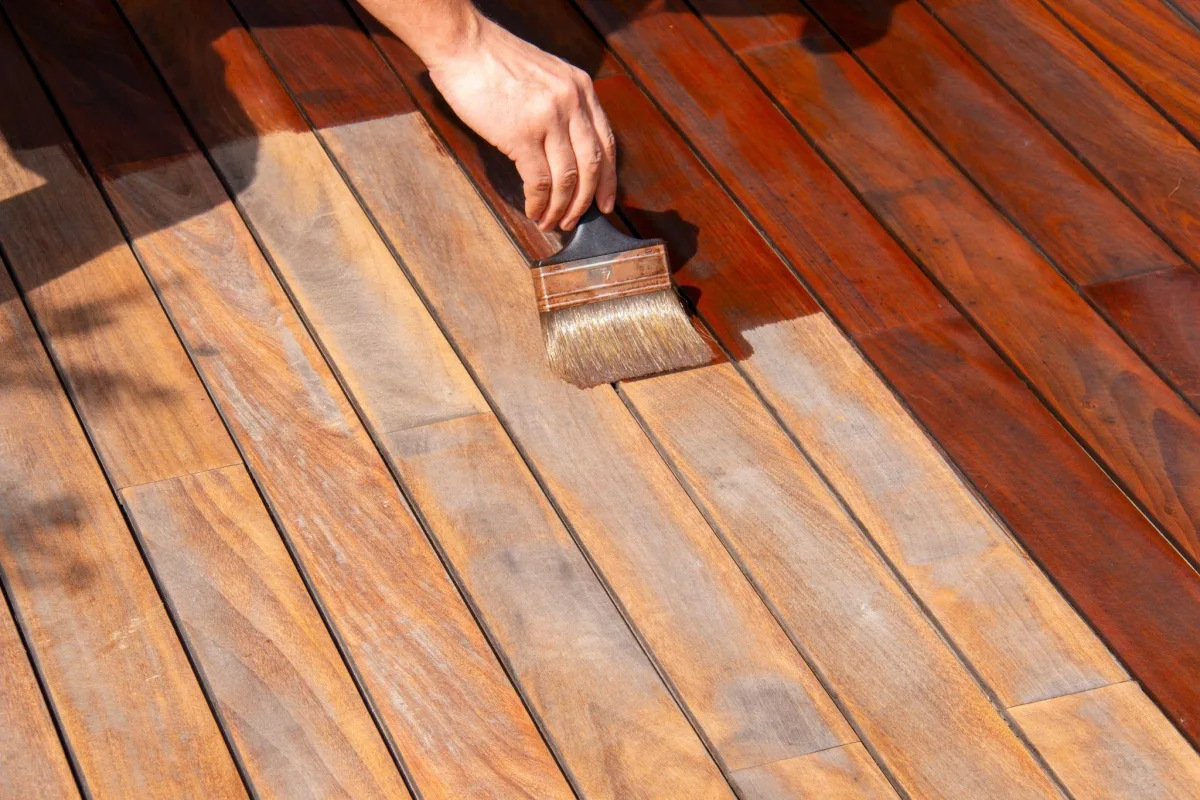
Pressure-treated southern yellow pine is the most common residential decking, and it brings its own problem: factory treatment leaves high moisture inside the wood.
New Pressure-Treated Lumber
Fresh treated wood is still full of water and factory chemicals. A film-forming stain over wet wood traps that moisture and bubbles off. Let new lumber dry out before coating, and test by sprinkling water on it — if it beads instead of soaking in, the wood is not ready.
Aged or Weathered Pressure-Treated Pine
Older treated lumber has open, thirsty grain and micro-checking, so it drinks stain fast. Penetrating oil-alkyd hybrids fill those open pores and restore color depth without building a surface film that will later peel.
Coordinating deck tones with exterior trim colors? See our feature on color drenching.
“Pro tip: penetrating stains work by absorption, not build. On a two-coat system, apply the second coat wet-on-wet within the window the label gives, then wipe off anything still sitting on the surface after about 15 minutes. Leaving unabsorbed stain to dry is what creates sticky, shiny patches that never fully cure.”
Deck Stain Opacities Compared
- Clear sealer: no pigment, minimal UV protection, 1 year or less. Only for new hardwoods you plan to maintain often.
- Transparent: light pigment load, shows full grain, roughly 1-2 years on horizontal surfaces.
- Semi-transparent: moderate pigment, grain still visible, 2-3 years and the most common deck choice.
- Semi-solid: heavy pigment, grain muted, 3-4 years and good for aged or blotchy lumber.
- Solid color: opaque acrylic film, hides grain entirely, 4-5 years but it will eventually peel rather than wear.
Prepping a Deck for Stain
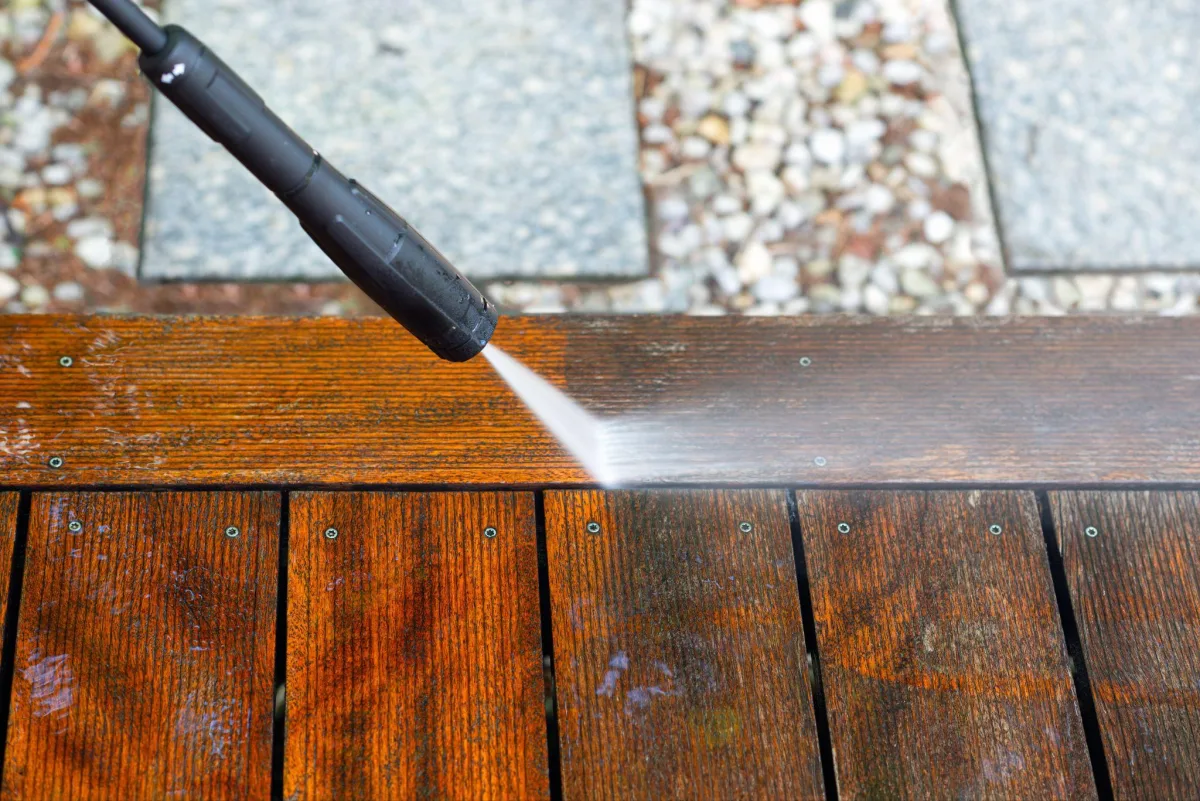
Clean the boards with a wood cleaner to lift mildew and graying, rinse thoroughly, and let the deck dry for at least 48 hours of good weather. Sand any raised grain or mill glaze, replace failed fasteners, and mask adjacent siding before you open the can.
For a full exterior project around the deck, see our exterior painting services.
Common Questions About Deck Stains
How long should new pressure-treated wood dry before staining?
Usually several weeks to a few months depending on climate. Skip the calendar and use the water test: sprinkle a few drops on the boards, and if they soak in within about 10 minutes the wood is ready.
Can you stain over an old solid-color stain?
Only with another solid. A penetrating stain cannot get through an existing film, so it will sit on top and stay tacky. Going back to semi-transparent means stripping and sanding to bare wood.
How often should a deck be restained?
Every 2 to 3 years for semi-transparent on a horizontal surface, longer for vertical rails and skirting. Sun exposure and traffic drive the interval far more than the label does.
Is oil or water-based better for decks?
Oil for penetration, conditioning, and easy recoating; water-based acrylic for color retention and cleanup. On foot-traffic surfaces most professionals still favor a penetrating oil or hybrid.
Ready for Professional Deck Staining?
Most deck stain failures are moisture and prep failures, not product failures. Getting the wood clean, dry, and correctly assessed is what makes the finish last.
Contact That 1 Painter to schedule a detailed, obligation-free on-site estimate. Every home is different, so final pricing always comes from an in-person assessment of materials, prep, and surface condition.
