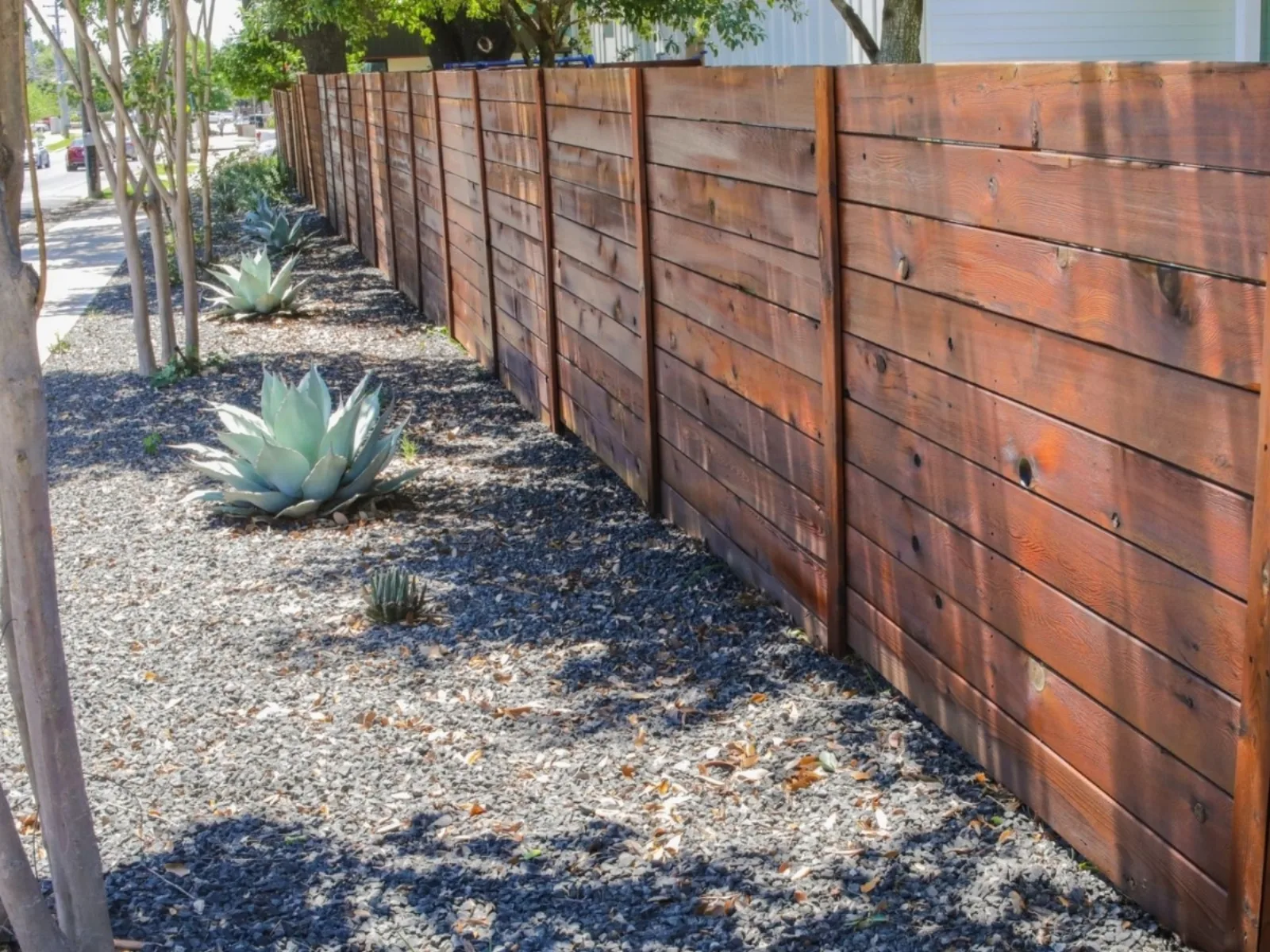
By Mary C.
Plan on one gallon of stain for every 150 to 250 square feet of fence on rough-sawn or weathered lumber, or one gallon per 200 to 300 square feet on smooth, newer boards. The number people get wrong is the surface area, not the coverage rate: a fence has two sides, and overlapping construction styles add far more surface than the tape measure suggests.
Quick Reference: Fence Stain Calculations
- Coverage: 150-250 sq ft per gallon on rough-sawn wood, 200-300 on smooth wood.
- Two sides: double the fence length before multiplying by height.
- Construction: add 20-30% for shadowbox or board-on-board overlap.
- Buffer: add another 10-15% for sprayer overspray and brush soak.
Wood species and climate shift absorption meaningfully. Humid regions leave fibers holding moisture, which reduces uptake. Arid climates produce bone-dry, thirsty boards that can pull coverage well below the label figure.
How to Calculate Fence Surface Area

Multiply total linear fence length by height, then multiply by 2 for both sides. A 100-foot run of 6-foot fence is 600 square feet per face, so 1,200 square feet total. Coating specifications from the Paint and Decorating Contractors of America treat that two-sided figure as the baseline.
Flat square footage still ignores posts, top rails, middle runners, and the edges of overlapping pickets. Those add real surface, which is where the construction multiplier comes in.
Before buying, check any sealer or stain left from a previous season with our guide on whether you can use old paint.
“Pro tip: a flat picket fence matches basic square footage closely, but board-on-board and shadowbox styles hide 20 to 30 percent more surface in the overlaps and edges. Measure the flat area, then apply the multiplier before you convert to gallons, or you will be one can short at the far end of the run.”
Wood Porosity Changes Everything
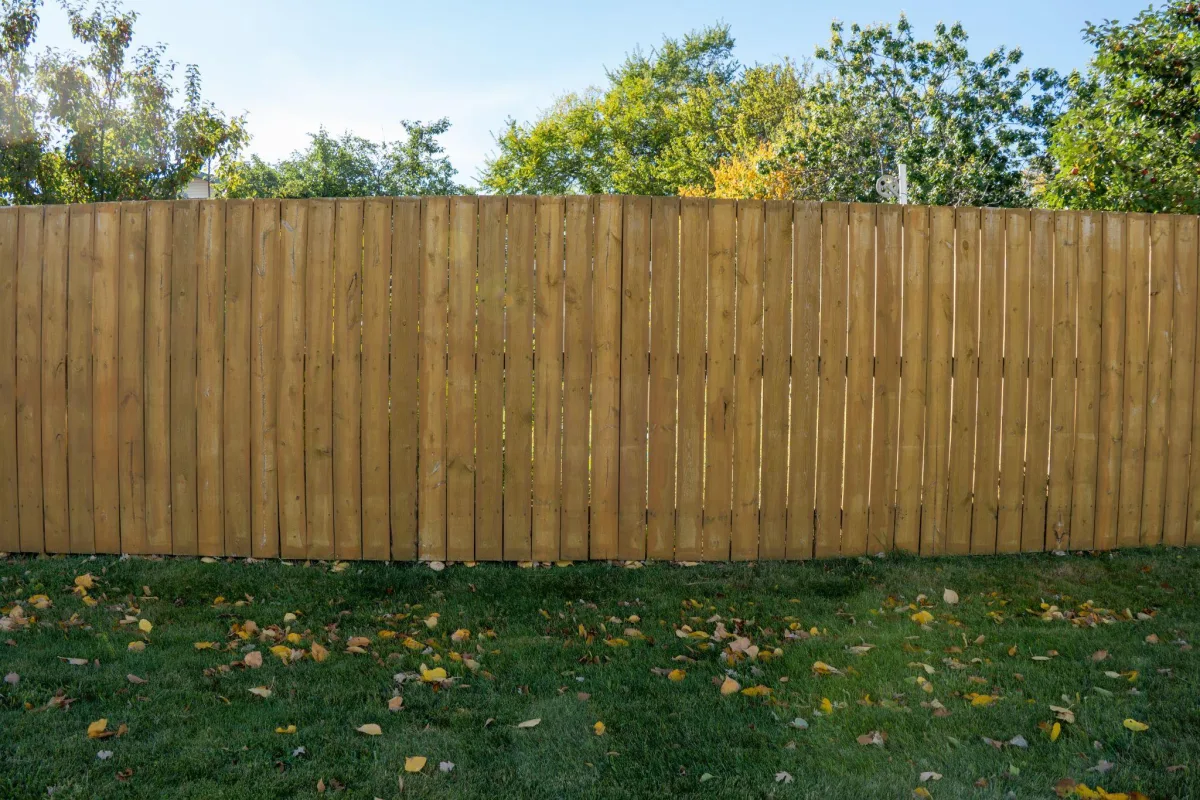
New Smooth-Planed Lumber
Factory-milled boards have closed grain and often a smooth mill glaze, so they absorb less and yield higher coverage — toward the 300 sq ft per gallon end. Mill glaze can also cause blotchy absorption, which is why a light sanding helps.
Rough-Sawn or Weathered Wood
Rough-cut and aged fencing has open, coarse grain that behaves like a sponge. Dry, unsealed fibers pull stain fast and drop coverage toward 150 sq ft per gallon.
Coordinating fence tone with the rest of the exterior? See our feature on color drenching.
“Pro tip: penetrating semi-transparent stains rely on absorption, not build. Apply the second coat wet-on-wet within the label window, then wipe back anything still sitting on the surface. Stain that dries unabsorbed stays tacky and collects dirt all season.”
Worked Example
- 150 linear feet of 6-foot board-on-board fence.
- 150 x 6 = 900 sq ft per face; x2 sides = 1,800 sq ft.
- Add 25% for board-on-board overlap: 2,250 sq ft.
- Weathered wood at 200 sq ft per gallon: about 11.25 gallons.
- Add 12% application buffer: roughly 12.5 gallons, so buy 13 or three 5-gallon pails.
Buy it all in one batch. Stain tinted across separate production runs can differ subtly in tone, and on a continuous fence line that shows.
Common Questions About Fence Stain Quantities
Do I really need to stain both sides?
For protection, yes. An unsealed back face absorbs moisture and drives cupping and warping that eventually pushes the finished side apart. Neighbor agreements sometimes limit access, but the wood does not care whose yard it faces.
Does spraying use more stain than brushing?
Yes, meaningfully. Overspray and atomization losses run 10 to 20 percent higher, which is why the buffer exists. Back-brushing after spraying also improves penetration.
How many coats does a fence need?
Usually one for penetrating semi-transparent on weathered wood, two for solid color or for new smooth lumber. A second coat on a saturated fence does not absorb and will stay tacky.
Should I buy extra?
Round up one container rather than down. Same-batch stain for touch-ups later is worth far more than the cost of the extra can.
Ready for Professional Fence Staining?
Estimating material is the easy half. Cleaning, drying, and matching the product to the wood's condition is what decides whether the finish lasts two years or five.
Contact That 1 Painter to schedule a detailed, obligation-free on-site estimate. Every home is different, so final pricing always comes from an in-person assessment of materials, prep, and surface condition.
