By Norman R.
Most rooms are painted with clear boundaries. Walls are one color, trim is white, ceilings are ignored, and doors are an afterthought. That approach feels safe and there’s nothing wrong with it, but it can also make a space feel chopped up and visually busy.
Overview
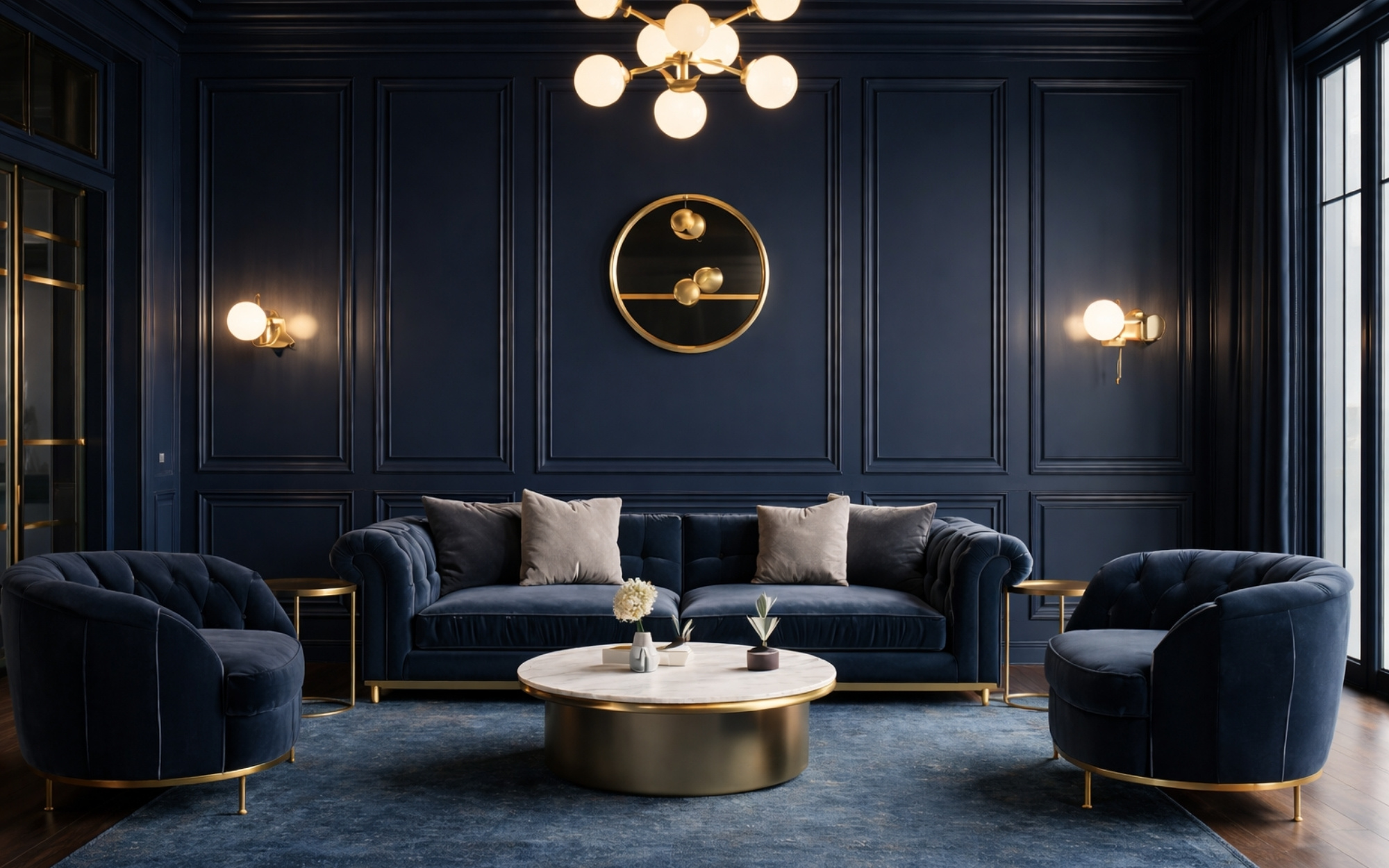
Color drenching flips that thinking. Instead of breaking a room into pieces, it wraps the entire space in a single color to create calm, cohesion, and depth. Color drenching paints the room with a single, monochromatic scheme.
If you have seen photos of rooms that feel dramatic but somehow peaceful at the same time, there is a good chance they are color drenched. This guide starts with a fast, plain-English answer, then explains how it works, which colors succeed, and how to avoid common mistakes.
Quick Answer: What Is Color Drenching?
Color drenching is an interior painting technique where one paint color is used on nearly every surface in a room, including walls, ceilings, trim, doors, and baseboards. Different paint finishes are used on each surface to add depth and durability, even though the color stays the same. The result is a bold but calming space that feels unified instead of visually broken up.
What Color Drenching Actually Means (And What It Does Not)
Color drenching does not mean dumping paint everywhere or ignoring proper prep. It is a deliberate design choice that relies on consistency and control.
In a color drenched room, the same color is applied to:
- Walls
- Ceilings
- Trim and baseboards
- Doors and door frames
- Built-ins or architectural features in the room
What changes is not the color, but the finish. That finish variation is what keeps the room from feeling flat. Diversifying the paint sheen can add in the difference the room needs to push some elements back and bring others forward. Remember: light reacts to different sheens in a different way.
Most professionally color drenched rooms use:
- Flat or matte finish on ceilings
- Satin or eggshell on walls
- Semi-gloss or gloss on trim and doors
Why Color Drenching Makes Rooms Feel Calm
At first glance, painting everything one color sounds overwhelming. In practice, it often has the opposite effect.
When your eye does not stop at white trim lines or contrasting ceilings, the room feels quieter. Visual breaks disappear, and the space reads as one continuous environment. Choosing the right paint color is key to the proper effect.
Color drenching works especially well when:
- You want a cozy, enveloping feel
- The room has architectural detail
- You plan to decorate with art, textiles, or furniture that pops
The paint becomes a backdrop instead of the main attraction.
The 7 Best Paint Colors to Paint Drench With
Not every paint color performs well when applied to every surface. The best color drenching choices maintain depth across lighting changes and finish differences.
1. Deep Green
Grounded and calming, deep greens work well in bedrooms, offices, and libraries.
- Sherwin-Williams: Pewter Green (SW 6208)
- Benjamin Moore: Essex Green (HC-188)
- Behr: Laurel Tree (S390-5)
2. Navy Blue
Navy holds richness across flat, satin, and semi-gloss finishes.
- Sherwin-Williams: Naval (SW 6244)
- Benjamin Moore: Hale Navy (HC-154)
- Behr: New Navy Blue (BXC-26)
3. Warm Charcoal
Charcoal creates a bold, architectural feel without the harshness of black.
- Sherwin-Williams: Iron Ore (SW 7069)
- Benjamin Moore: Wrought Iron (2124-10)
- Behr: Graphic Charcoal (N500-6)
4. Soft Greige
Greige is ideal for homeowners who want cohesion without heavy saturation.
- Sherwin-Williams: Accessible Beige (SW 7036)
- Benjamin Moore: Revere Pewter (HC-172)
- Behr: Blank Canvas (DC-003)
5. Earthy Bronze or Brown
These tones add warmth and depth and pair well with wood and metal accents.
- Sherwin-Williams: Urbane Bronze (SW 7048)
- Benjamin Moore: Van Buren Brown (HC-70)
- Behr: Espresso Beans (PPU5-01)
6. Muted Blue-Green
Blue-green shades balance warm and cool light throughout the day.
- Sherwin-Williams: Sea Salt (SW 6204)
- Benjamin Moore: Quiet Moments (1563)
- Behr: Dragonfly (PPU12-03)
7. Dusty Rose or Muted Mauve
Muted pink-based tones add warmth without feeling trendy.
- Sherwin-Williams: Redend Point (SW 9081)
- Benjamin Moore: Sharon Rose (039)
- Behr: Mauve It (N120-3)
Pro tip: Mid-tone and slightly desaturated paint colors (think “not too dark, not too bright,” and more “soft or smoky” than neon) perform best in color drenched rooms because they maintain depth across multiple finishes without highlighting glare or surface flaws.
Pro tip 2: Use different paint finishes or sheens on different surfaces for an even more dynamic and layered single-color look in your color-drenched room!
What Rooms Color Drenching Works Best In
Color drenching shines in rooms where mood matters more than contrast, such as:
- Bedrooms
- Dining rooms
- Home offices
- Libraries
- Powder rooms
Smaller rooms often benefit the most because removing visual breaks makes the space feel intentional rather than cramped.
When NOT To Color Drench
Color drenching may not be the best choice if:
- The room has very poor lighting and a dark color is planned
- Trim and doors are in rough condition
- You prefer high contrast between surfaces
- The space flows directly into many other rooms
In open floor plans, it is usually best to limit color drenching to a single defined room.
The 9 Steps to Decorate a Color Drenched Room
1. Define The Room’s Job In One Sentence
Decide what the room is supposed to feel like: cozy retreat, dramatic dining room, calm office, playful powder room. That one sentence becomes your filter for every decor choice.
2. Choose Your Contrast Level First (High, Medium, Or Soft)
Color drenched rooms need contrast, but you get to control how bold it is.
- High contrast: crisp black, bright white, graphic patterns
- Medium contrast: warm woods, creams, brass, woven textures
- Soft contrast: tone-on-tone textiles, muted prints, layered neutrals
3. Lock A Simple 3-Part Palette
Your paint is color #1. Add only two more. A reliable formula:
- Paint color (dominant)
- Neutral (cream, oatmeal, warm white, light gray)
- Accent (black, walnut, brass, terracotta, one bold pop)
This prevents the most common mistake: adding too many “cute” extra colors that fight the drenched look.
4. Buy The Big Anchors Before The Small Stuff
Start with pieces that control the room’s visual weight:
- Rug
- Sofa or bedding
- Curtains
- Main artwork or mirror
If these are right, the rest falls into place. If they are wrong, you will keep chasing the room with accessories.
5. Add Depth With Texture, Not More Paint Colors
To keep a drenched room from feeling flat, layer at least three textures:
- Linen or cotton curtains
- Wool or woven rug
- Velvet, boucle, or chunky knit pillows
- Natural wood (oak, walnut, rattan)
- Ceramic, stone, or plaster decor
- Leather accents (chair, ottoman, tray)
6. Make Frames And Wall Decor Look Custom
This is a high-impact pro move in color drenched rooms. Pick one approach and commit:
- Blend: paint picture frames the same color as the walls so art feels built-in
- Contrast: use black frames or warm wood frames for structure
- Brighten: use brass or gold frames to lift darker walls
Avoid mixing random finishes (silver, white, black all together). It breaks the calm immediately.
7. Choose Art That Reads From Across The Room
Because the paint is already a statement, your art should be clear and intentional:
- One larger piece instead of many small ones
- Black-and-white photography
- Simple abstracts
- Art with one or two accent colors that match your palette
8. Layer Lighting So The Color Doesn’t Feel Heavy
Lighting is often the difference between “designer” and “cave.” Aim for three layers:
- Overhead: flush mount or chandelier
- Task: desk lamp, reading lamp
- Glow: table lamp, sconces, picture light
Quick win: add a lamp to any corner that feels dark, then use warm bulbs for moody paint colors.
9. Style In Groups, Then Edit Hard
Color drenched rooms look best when they are not cluttered. Use this method:
- Style accessories in groups of three (tall, medium, small)
- Repeat one material around the room (brass, black metal, light wood)
- Remove about 20% of what you added
If you are unsure what to remove, start with small, fussy items. Bold rooms prefer simple shapes.
FAQs About Color Drenching
Is color drenching the same as monochromatic design?
It is a type of monochromatic design, but color drenching specifically applies the same paint color to architectural surfaces.
Do ceilings need to be painted the same color?
Yes. True color drenching includes painting the ceiling, typically in a flat or matte finish.
Does color drenching make rooms feel smaller?
Usually no. Removing visual breaks often makes rooms feel more cohesive and intentional.
Can you color drench with light colors?
Yes, but the effect is subtler. Deeper colors create more drama.
Is color drenching expensive?
Material costs are similar to standard interior painting, but labor can increase since ceilings and trim are included.
The Simple Rule
If you want a calm, cohesive room that feels intentional and bold at the same time, color drenching is a strong option. Deciding which paint color to use can be daunting and if you prefer contrast and separation between surfaces, it may not be the right fit. Color drenching your space might just be the designer lift your home needs to feel like a new, cohesive, modern, and full space.
If you are considering color drenching and want clean lines, proper finishes, and a result that feels designed instead of overwhelming, contact That 1 Painter for a free estimate. Our team can help you choose the right color and execute it the right way the first time.
