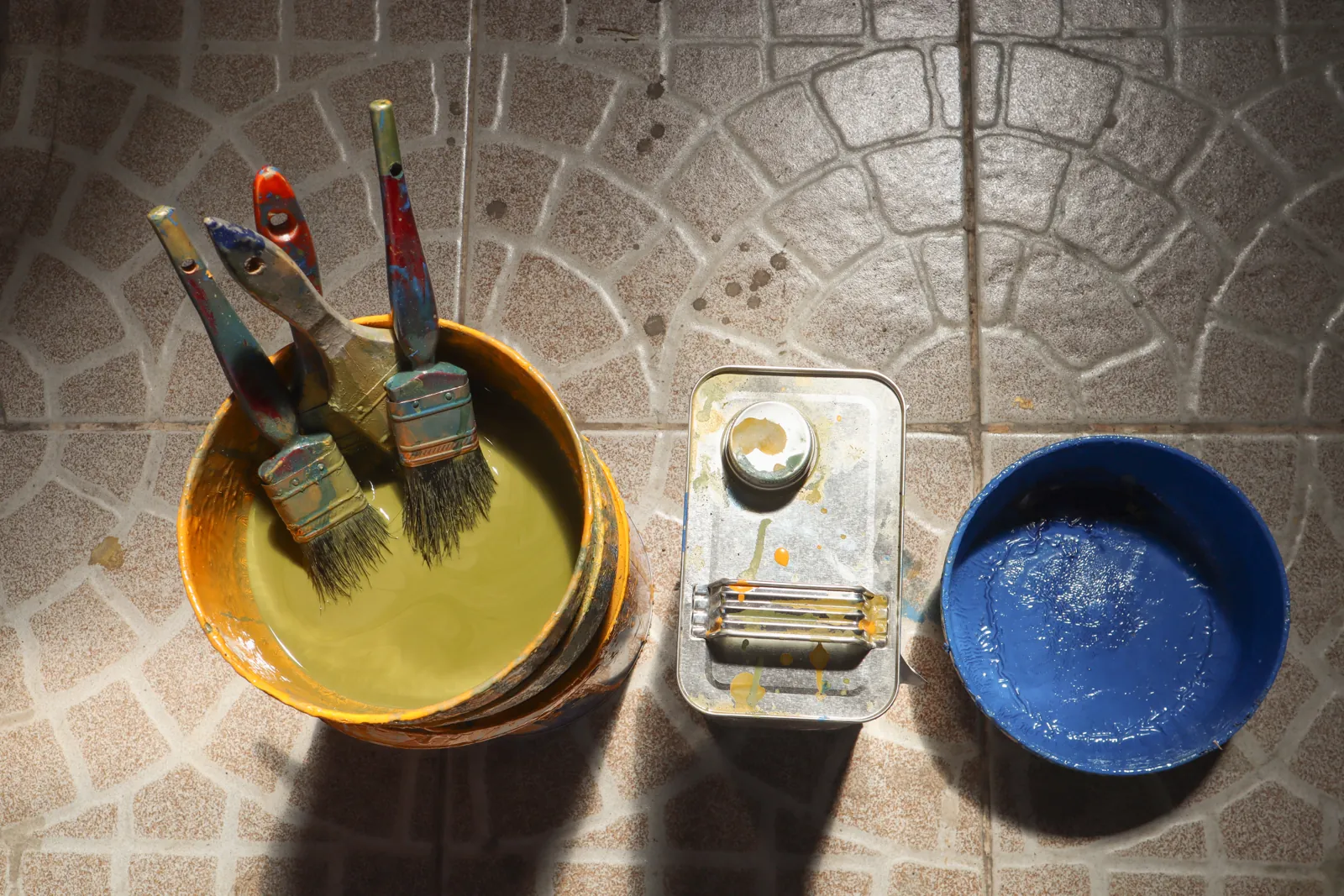
By Ben M.
Mineral spirits are a petroleum-based solvent used with oil-based paints, stains, and primers. They dissolve the oil and alkyd resins in those coatings, which is why they clean brushes and rollers that water cannot. Painters also use them to thin oil-based products within label limits and to wipe down surfaces before finishing. If you are working with water-based latex or acrylic paint, you do not need mineral spirits at all, because warm water does the job.
Knowing which cleanup liquid matches your coating saves your tools and keeps your project on track. The most common DIY mistake is grabbing the wrong solvent. Water on an oil-coated brush leaves the bristles gummy and stiff. Mineral spirits on a latex brush wastes solvent and adds fumes for no benefit. Matching the cleaner to the product label is one of the simplest habits that separates a clean job from a ruined set of tools.
Regional weather, humidity, and local building materials influence when homeowners reach for oil-based products and mineral spirits. In humid Southern coastal climates, oil-based primers are still common on exterior trim and stain-prone wood, so solvent cleanup is a regular part of the job. In high-altitude or arid Western regions, low humidity speeds solvent evaporation, so containers must stay sealed to limit waste and vapor buildup. In Northern freeze-thaw regions, oil-based stains and enamels are often used on decks, doors, and older millwork, and solvent must be stored safely through cold winters. Below is a complete technical guide to mineral spirits, their uses, and safe handling.
Quick Reference Summary for Mineral Spirits
- Core Definition: Mineral spirits are a refined petroleum distillate solvent designed for oil-based paints, stains, varnishes, and primers.
- Primary Uses: Cleaning brushes, rollers, and spray equipment; thinning oil-based coatings within label limits; wiping down and degreasing surfaces.
- When Not to Use: Water-based latex and acrylic paints clean up with warm water and mild soap, not solvent.
- Safety Rule: Even "odorless" mineral spirits release vapors, so always work in a well-ventilated area away from flames and sparks.
- Disposal Standard: Never pour used solvent down a drain or onto the ground; let solids settle, reuse the clear liquid, and take waste to a household hazardous waste site.
What Exactly Are Mineral Spirits Made Of?
Mineral spirits are a clear liquid refined from crude oil. They belong to a family of petroleum distillates that evaporate at a moderate rate. That evaporation rate is slow enough to let oil-based paint level out, yet fast enough to flash off without leaving residue.
The solvent works because "like dissolves like." Oil-based paints use alkyd or natural oil binders. Those binders do not mix with water, but they dissolve readily in petroleum solvents. When you swirl an oil-coated brush in mineral spirits, the solvent breaks down the wet binder and releases pigment from the bristles.
Standard mineral spirits contain a small share of aromatic compounds, which create the familiar sharp odor. Odorless mineral spirits go through extra refining to remove most of those aromatics. The smell drops sharply, but the product is still a volatile solvent. It still evaporates into the air you breathe.
“Pro Tip 1: Odorless Does Not Mean Fume-Free. "Odorless" refers to how the solvent smells, not to how much vapor it releases. Odorless mineral spirits still contain Volatile Organic Compounds (VOCs) that build up in closed rooms. Open windows, run a box fan pointed outdoors, and take fresh-air breaks during any cleanup session.”
The National Institute for Occupational Safety and Health, part of the Centers for Disease Control and Prevention (CDC), publishes exposure limits and safety guidance for Stoddard solvent, a common type of mineral spirits.
How Do Mineral Spirits Differ From Paint Thinner and Other Solvents?
Many homeowners use "mineral spirits" and "paint thinner" interchangeably. They are closely related, but they are not always identical products. Choosing the correct solvent depends on the coating you are cleaning or thinning.
- Mineral Spirits: Mineral spirits are a more refined petroleum solvent. They typically have less odor and leave less residue. Most oil-based paint, stain, and primer labels list mineral spirits as the recommended cleanup solvent.
- Paint Thinner: Products sold as paint thinner are often a less refined grade of mineral spirits, or a blend of petroleum solvents. They clean oil-based tools effectively but may smell stronger. Always check that the product label lists your coating type.
- Water and Mild Soap: Water-based latex and acrylic coatings clean up with warm water and a little dish soap. Using solvent on latex tools adds cost and fumes without improving cleanup. To learn more about how these two coating families differ, read our guide on oil-based vs. water-based paint.
- Denatured Alcohol and Lacquer Thinner: Shellac-based primers clean up with denatured alcohol, and lacquers require lacquer thinner. Mineral spirits will not properly dissolve either finish. Read the cleanup section of every product label before you start.
When Should You Use Mineral Spirits on a Painting Project?
Mineral spirits have several practical jobs beyond brush cleaning. Professional painters keep a sealed can on hand whenever oil-based products are part of the job.
Cleaning Brushes, Rollers, and Tools: This is the primary use. Mineral spirits dissolve wet oil-based paint, stain, and primer from bristles, roller covers, paint trays, and spray equipment.
Thinning Oil-Based Coatings: Some oil-based paints and stains allow a small amount of mineral spirits to improve flow. Only thin when the label permits it, and never exceed the manufacturer's limit.
Wiping Down Surfaces: A rag dampened with mineral spirits removes light grease, wax, and sticky residue before finishing. On bare wood, a light wipe briefly previews how the grain will look under a clear finish or stain.
Removing Drips and Spatter: Fresh oil-based drips on hard surfaces lift with a rag dampened in mineral spirits. Test first on finished floors or countertops.
If your project calls for oil-based primer under a latex topcoat, review our guide on oil-based vs. water-based primers to plan your cleanup supplies.
Technical Comparison of Paint Cleanup Solvents
This reference table matches common coatings with the correct cleanup liquid so you never reach for the wrong solvent.
- Latex and acrylic paint: Warm water and mild soap. Very low. Walls, ceilings, most trim.
- Oil-based paint and enamel: Mineral spirits or paint thinner. Moderate to strong. Older trim, doors, metal.
- Oil-based primer: Mineral spirits. Moderate to strong. Stain blocking, bare wood, tannin control.
- Oil-based stain and varnish: Mineral spirits. Moderate. Decks, furniture, interior woodwork.
- Shellac-based primer: Denatured alcohol. Strong. Odor sealing, knots, water stains.
How Do You Clean Oil-Based Paint Brushes With Mineral Spirits?
Follow this professional cleanup process to restore brushes and rollers after using oil-based products:
- Remove Excess Paint: Scrape the brush against the can rim and brush out remaining paint on scrap cardboard or newspaper.
- Pour a Small Amount of Solvent: Pour about an inch of mineral spirits into a clean metal or solvent-safe container. You do not need to fill a bucket.
- Work the Solvent Into the Bristles: Swirl the brush and press it against the container bottom. Work the solvent up toward the ferrule where paint hides.
- Repeat With Fresh Solvent: Move the brush to a second container of clean mineral spirits. Repeat until the solvent stays mostly clear.
- Wash With Soap and Water: Finish with warm water and a little dish soap to remove solvent residue from the bristles.
- Comb, Spin, and Store: Comb the bristles straight, spin or shake out excess water, and store the brush in its original keeper sleeve.
Roller covers used with oil-based paint take a large volume of solvent to clean. Many painters simply dispose of them properly once dry. For more detail on keeping your tools in shape, read our guide on how to clean a paint brush properly.
“Pro Tip 2: Let Used Solvent Settle and Reuse It. Do not throw out dirty mineral spirits after one cleaning. Pour used solvent into a sealed, labeled jar and let it sit for several days. Paint solids settle to the bottom, and you can carefully pour off the clear solvent for reuse. Dispose of the sludge through your local household hazardous waste program.”
The U.S. Environmental Protection Agency (EPA) identifies leftover paint thinners and solvents as household hazardous waste, so take used mineral spirits to a local collection site.
What Are the Most Common Mineral Spirits Mistakes?
Avoiding these errors keeps you safe and protects your tools:
- Using Solvent on Latex Paint: Mineral spirits are unnecessary for water-based paint. Warm water cleans latex tools faster and cheaper.
- Working in a Closed Room: Vapors build up quickly in bathrooms, closets, and basements. Ventilate even when using odorless products.
- Wadding Up Oily Rags: Rags soaked with oil-based paint, stain, or finishing oils can heat up and ignite as the oils cure. Lay them flat outdoors to dry or store them in a sealed metal can filled with water.
- Pouring Solvent Down the Drain: Mineral spirits contaminate water systems and can create fire hazards in plumbing. Use your local hazardous waste drop-off.
- Storing Solvent in Unlabeled Containers: Clear solvent looks like water. Keep it in its original can or a clearly labeled, sealed container away from children and pets.
“Pro Tip 3: Spot-Test Before Wiping Any Finished Surface. Mineral spirits are gentle on most fully cured oil-based finishes, but they can soften fresh paint, dissolve wax finishes, and haze some plastics and vinyl. Before you wipe down a painted cabinet, a stained door, or a countertop edge, test a small area that will not be seen. Wait a few minutes, check for dulling or tackiness, and only then clean the rest.”
Answers to Common Questions About Mineral Spirits
Do you need mineral spirits for latex paint?
No. Latex and acrylic paints are water-based and clean up with warm water and a mild soap. Mineral spirits are only needed for oil-based paints, stains, varnishes, and primers.
Are odorless mineral spirits safe to use indoors?
Odorless mineral spirits have less smell, but they still release solvent vapors. Use them only with open windows and active airflow. Wear nitrile gloves and avoid prolonged skin contact.
Can mineral spirits remove dried paint?
Mineral spirits work best on wet or fresh oil-based paint. Fully cured paint usually needs a dedicated paint remover or mechanical scraping. Test any remover on a small area first.
Can you use mineral spirits to clean walls before painting?
A light wipe can remove grease spots on surfaces that will receive oil-based primer. For latex projects, most walls only need mild detergent and water. Let any solvent-wiped area dry completely before priming.
Are mineral spirits flammable?
Yes. Mineral spirits are a combustible liquid, and their vapors can ignite. Keep them away from pilot lights, space heaters, cigarettes, and power tools that throw sparks.
Workplace chemical safety guidelines from the Occupational Safety and Health Administration (OSHA) call for adequate ventilation, eye protection, and chemical-resistant gloves when handling petroleum solvents.
Ready for Professional Interior and Exterior Painting?
Choosing the right coatings, managing solvent cleanup, and disposing of materials safely take time and technical skill. Let our experienced teams handle your interior painting or exterior painting project from prep through cleanup.
Note: Pricing estimates are based on 2026 regional averages. Every home is unique, and final quotes require an on-site assessment to account for material costs, prep work, and structural conditions.
Contact the team at That 1 Painter today to schedule your detailed, obligation-free on-site estimate, and let professionals handle every coating and cleanup detail safely. Book Your Free Professional Estimate Now
