By Norman R.
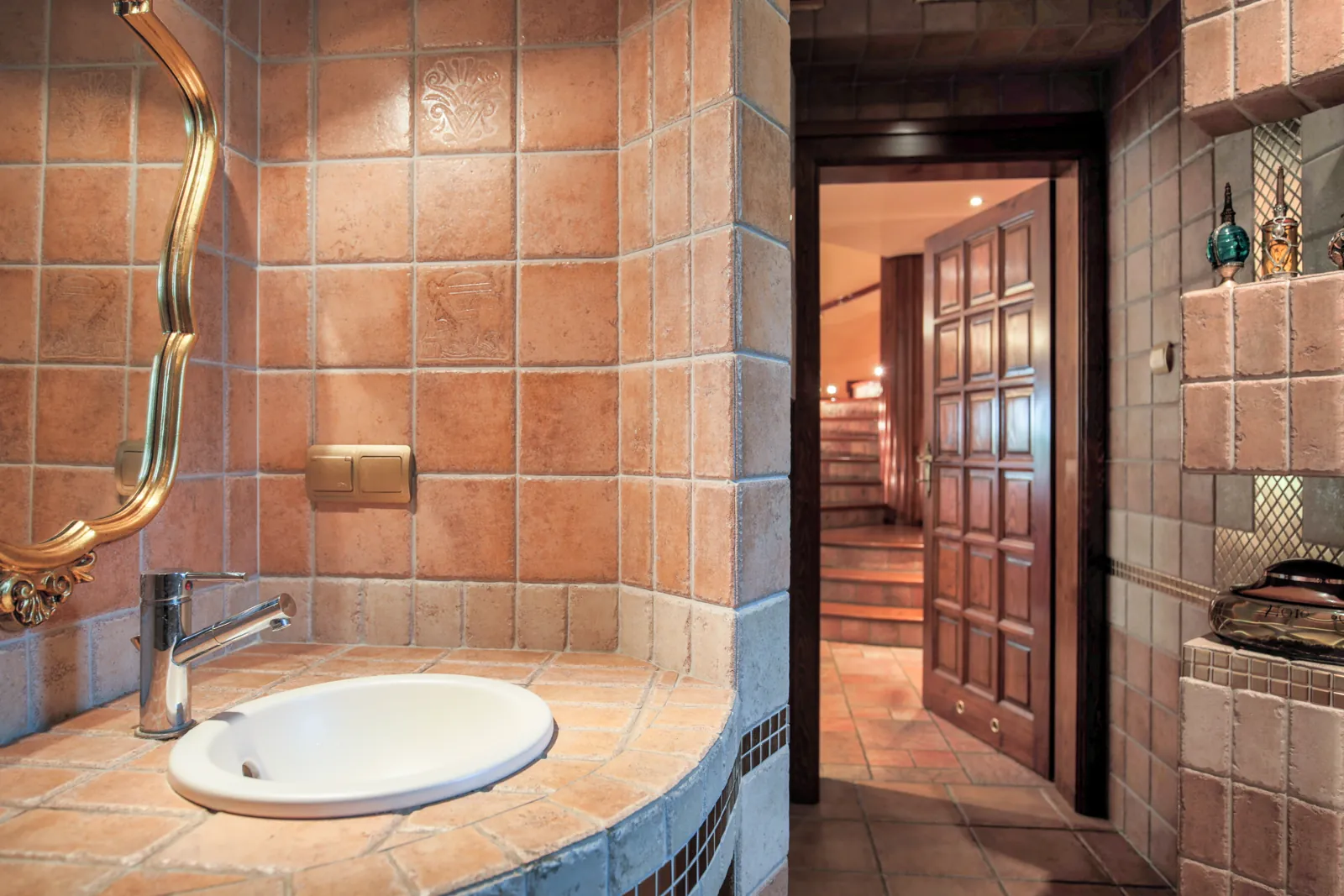
Yes, you can use Moroccan clay in a bathroom, but usually only in the dry zones. Moroccan clay brings a warm, old-world feel and is highly customizable, with many color options. The rule is simple: do not use it anywhere that gets direct water contact. That means no Moroccan clay inside the shower, around the tub splash zone, or behind a faucet.
Bathrooms are one of the most demanding rooms in a home for any wall finish. Steam, splashes, and daily cleaning put constant stress on surfaces. The most common mistake is treating a decorative clay finish like tile and running it straight into the shower. If you want the same high-end look in wet areas, use a concrete-style finish designed to handle direct water exposure.
Regional climate conditions, seasonal humidity, and local building practices heavily influence how decorative wall finishes perform in bathrooms. In humid Southern coastal climates, high ambient moisture means bathrooms stay damp longer, so strong exhaust ventilation and a clear dry-zone layout are essential. In high-altitude or arid Western regions, dry air helps bathrooms dry out quickly after showers, but trowel-applied finishes can set up fast during installation. In Northern properties subject to freeze-thaw cycles, cold exterior walls can cause condensation on bathroom surfaces during winter. Below is a complete technical guide detailing how to use Moroccan clay in a bathroom the right way.
Quick Reference Summary for Moroccan Clay in a Bathroom
- Core Answer: Moroccan clay works in bathrooms, but usually only in the dry zones.
- Design Advantage: It delivers a warm, old-world look and is highly customizable, with many color options.
- No-Go Zones: Avoid the shower interior, the tub splash zone, and the wall behind a faucet.
- Wet-Area Alternative: Use a concrete-style finish designed to handle direct water exposure.
- Supporting Rule: Good ventilation helps every bathroom wall finish last longer.
What Is Moroccan Clay and Why Is It Popular for Bathrooms?
Moroccan clay is a decorative wall finish applied by hand to create soft, layered texture and natural color variation. Unlike flat paint, it has visible depth and movement. Light moves across the surface in a way that feels warm and handcrafted. That old-world character is why it has become a favorite for powder rooms and primary bathrooms.
The finish is also highly customizable. It comes in many color options, from earthy terracottas and warm sands to soft greens and muted grays. Application technique changes the final look as well. A tighter trowel pattern creates a calmer surface, while a looser pattern adds more movement and texture.
Bathrooms are a natural fit for this look because they are smaller rooms where a statement finish feels intentional. A Moroccan clay vanity wall or powder room can feel like a boutique hotel without a full renovation. If you are drawn to other natural, textured looks, explore our guide on what is limewash.
“Pro Tip 1: Map Your Wet and Dry Zones Before Choosing Finishes. Before you pick any decorative finish, walk the bathroom and mark where water actually lands. Run the shower and the faucet and watch for splashes. Anywhere that gets direct water contact is a wet zone. Everything else, such as vanity walls, upper walls, and areas away from fixtures, can be considered for Moroccan clay.”
Where Can You Use Moroccan Clay in a Bathroom?
The key is matching Moroccan clay to the areas where it will not see direct water. Here is how bathroom zones typically break down.
- Good Fits: Dry Zones: Moroccan clay works well on walls that get humidity but not direct water. Good candidates include the wall behind a vanity mirror (away from the faucet), toilet and powder room walls, upper walls above wainscoting, and accent walls away from fixtures. Powder rooms, which have no shower, are often the easiest place to start.
- Avoid: Inside the Shower: Shower walls take direct, repeated water contact every day. Moroccan clay is not the right finish here. Use a finish designed for constant water exposure instead.
- Avoid: The Tub Splash Zone: The walls around a tub catch splashes from bathing, filling, and cleaning. Even without a shower head, this area sees direct water. Keep Moroccan clay out of the splash zone.
- Avoid: Behind a Faucet: The wall directly behind a sink faucet takes splashes from handwashing and teeth brushing. This is a small area, but it gets wet many times a day. Keep Moroccan clay away from it or plan a backsplash.
If you are choosing paint for the rest of the room, read our guide on the best paint finish for a bathroom for sheen recommendations.
Technical Comparison of Bathroom Wall Finishes by Zone
This technical reference table breaks down where each finish fits in a bathroom based on water exposure.
- Moroccan clay: Warm, old-world, hand-troweled texture. Not recommended. Vanity walls, powder rooms, upper walls.
- Concrete-style finish (microcement): Seamless, modern, high-end. Designed for it (per product system). Showers, tub surrounds, wet walls.
- Bathroom paint (satin or semi-gloss): Smooth, uniform color. Splash-resistant, not for shower interiors. General walls, ceilings, trim.
- Tile: Classic, grout-line pattern. Yes, when properly installed. Showers, tub surrounds, backsplashes.
How Do You Get the Moroccan Clay Look in Wet Areas?
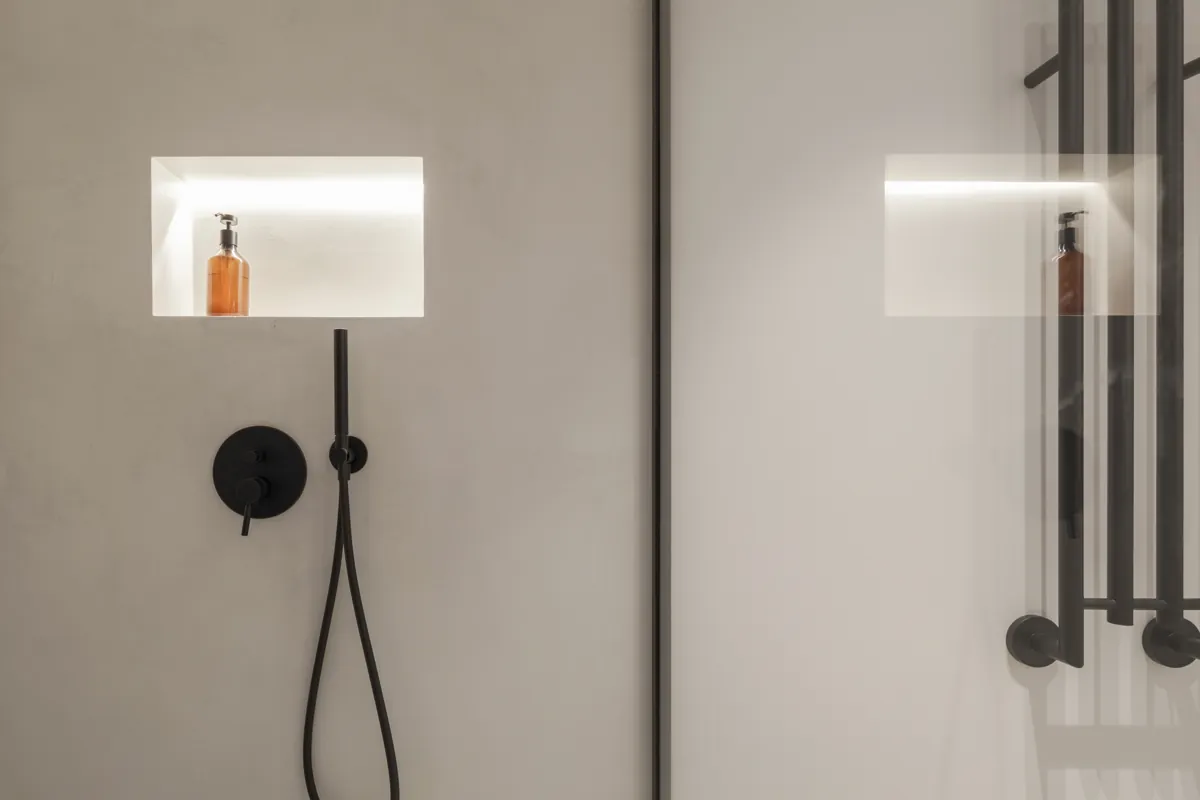
If you love the Moroccan clay look and want it to continue into the shower, you need a different product for the wet zones. A concrete-style finish designed to handle direct water exposure gives you that same high-end, seamless look where water hits. These finishes are often called microcement. They are applied in thin layers and sealed as a complete system for wet areas.
The best designs plan the two finishes together. The concrete-style finish goes in the shower, tub surround, and behind fixtures. Moroccan clay goes on the dry walls. Choosing coordinating colors makes the transition feel intentional rather than patched together.
Follow this professional planning process for a bathroom that uses both finishes:
- Identify Wet and Dry Zones: Mark every area that gets direct water contact, including the shower, tub splash zone, and faucet wall.
- Choose Your Moroccan Clay Color: Pick a color for the dry walls. Test samples in the room's actual lighting before committing.
- Select a Wet-Area Finish: Choose a concrete-style finish designed for direct water exposure for the wet zones.
- Coordinate Colors and Transitions: Match or complement tones between the two finishes. Plan clean stopping points at corners, trim, or tile edges.
- Prep the Walls: Repair damaged drywall and make sure surfaces are clean, sound, and dry. Our drywall repair services can handle damaged areas first.
- Apply and Allow Proper Cure Time: Follow the manufacturer's application and cure instructions for each product before using the bathroom normally.
“Pro Tip 2: Upgrade Ventilation Before Upgrading Finishes. Even in dry zones, bathroom walls see steam and humidity every day. A properly sized exhaust fan that runs during and after showers reduces moisture on every surface. Good airflow protects decorative finishes, paint, and trim alike. It also helps prevent mildew in corners and on ceilings.”
For finishes like this, specialty application matters. Our interior painting services team can help you plan the right finish for each part of your bathroom.
The U.S. Environmental Protection Agency (EPA) states that controlling moisture is the key to controlling mold indoors, which is why bathroom ventilation matters for every wall finish.
What Are the Most Common Moroccan Clay Bathroom Mistakes?
Avoiding these common errors keeps your Moroccan clay finish looking beautiful for years:
- Running It Into the Shower: Moroccan clay is not designed for direct water contact inside a shower.
- Ignoring the Tub Splash Zone: Splashes from bathing and cleaning can damage the finish around a tub.
- Applying It Behind the Faucet: The faucet wall gets wet many times a day and needs a water-ready surface.
- Skipping Ventilation: Poor airflow keeps bathroom walls damp and shortens the life of any finish.
- Not Planning Transitions: Stopping one finish without a clear edge can make the bathroom look unfinished.
“Pro Tip 3: Clean Gently and Ask About Upkeep. Decorative clay and plaster finishes are more delicate than standard bathroom paint. Clean them with a soft cloth, plain water, or a mild soap, and skip abrasive pads and harsh bathroom sprays. Ask your installer which sealer or wax was used on the finish and how often it should be refreshed, so the dry-zone walls keep their color and texture for years.”
Answers to Common Questions About Moroccan Clay in a Bathroom
Is Moroccan clay waterproof?
Moroccan clay should not be treated as a waterproof finish for wet areas. It works best in bathroom dry zones that do not get direct water contact. For showers and tub surrounds, use a concrete-style finish designed for water exposure.
Can Moroccan clay go inside a shower?
No, Moroccan clay should not be used inside a shower. Showers get direct, repeated water contact every day. A concrete-style finish such as microcement is designed for that use.
Is Moroccan clay a good choice for a powder room?
Yes, powder rooms are often one of the best places for Moroccan clay. They have no shower or tub, so most walls stay dry. Just keep the finish away from the area directly behind the faucet.
What colors does Moroccan clay come in?
Moroccan clay is highly customizable and comes in many color options. Popular choices range from warm terracottas and sandy neutrals to soft greens and grays. Always test a sample in your bathroom's lighting before choosing.
What finish gives the Moroccan clay look in wet areas?
A concrete-style finish designed to handle direct water exposure is the go-to choice for wet areas. It delivers a similar high-end, seamless look in showers and tub surrounds. Pairing it with Moroccan clay on dry walls creates a cohesive design.
Ready for Professional Decorative Finishes and Bathroom Painting?
Mapping wet and dry zones, choosing the right finishes, and applying hand-troweled textures require technical skill and careful planning. Let our experienced painting teams help you create a bathroom that looks high-end and holds up to daily use.
Note: Pricing estimates are based on 2026 regional averages. Every home is unique, and final quotes require an on-site assessment to account for material costs, prep work, and structural conditions.
Contact the team at That 1 Painter today to schedule your detailed, obligation-free on-site estimate, and bring a warm, old-world finish to your bathroom. Book Your Free Professional Estimate Now
