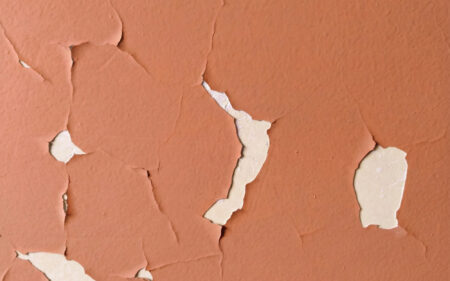
Every been in the middle of a paint project and had to stop and ask “why is my paint peeling?” Paint peeling is rarely random, and it is almost never because the paint “went bad.” In most homes, peeling shows up for one of three reasons: poor adhesion, moisture, or skipped prep. The good news is that once you identify which one you are dealing with, the fix is straightforward.
This guide gives you a fast reference first, then the deeper why so you can stop the peeling and keep it from coming back.
Quick Reference: The Three Real Causes of Peeling Paint
Bad adhesion: paint could not grip the surface (too glossy, dirty, dusty, or wrong primer).
Moisture: water or vapor pressure is pushing paint off (bathrooms, basements, windows, exterior leaks).
Rushed timing: paint went on too soon or recoated too fast (damp substrate, insufficient dry or cure time).
Cause 1: Bad Adhesion (the most common reason paint peels)
Paint needs two things to stick:
- A clean surface (no grease, dust, wax, or residue)
- A surface profile (microscopic texture) so the primer and paint can grab
If either is missing, the paint film can look fine at first, then fail later with chips, flakes, or full-on peeling.
Common adhesion traps
- Glossy trim or doors that were never scuff sanded
- Greasy kitchen walls near stoves, range hoods, and backsplash zones
- Dusty drywall after sanding patches where the dust was never removed
- Old oil-based paint that got coated with water-based paint without proper bonding prep
- Chalky exterior paint that was not stabilized before repainting
How to confirm it is an adhesion problem
- The paint peels off in larger pieces with minimal resistance
- The substrate underneath looks smooth, shiny, or dirty
- The peeling is worst around touch points: handles, corners, edges, and switch areas
Cause 2: Moisture (paint will not stick to a wet system)

Moisture problems can peel paint even if the paint and primer were “good.” If water is getting into the substrate, paint becomes the sacrificial layer. It blisters, bubbles, or flakes because the moisture needs a way out.
Where moisture-related peeling shows up most
- Bathrooms: poor ventilation, steam, and frequent wetting
- Basements: damp walls, humidity, and vapor pressure through masonry
- Windows and exterior walls: failed caulk, flashing issues, or leaks
- Laundry rooms and kitchens: humidity plus temperature swings
- Exterior siding and trim: water intrusion, missing paint maintenance, or poor drainage
How to tell moisture is involved
- Bubbling or blistering before peeling
- Peeling concentrated near a window, tub, shower, or exterior wall
- Dark staining, mildew, or “soft” drywall
- Paint failure that returns quickly after repainting
If you suspect moisture, fix the water source first. Repainting without solving the moisture issue is a repeat-failure guarantee.
Cause 3: Rushing Dry Time or Cure Time
Paint can feel dry and still be too soft to bond properly or handle recoat stress. That is especially true for enamels, humid rooms, and low temperatures.
The timing mistakes that trigger peeling
- Painting over a surface that is still damp (after cleaning, patching, or a leak)
- Recoating before the previous coat is ready
- Closing doors and windows too early and trapping moisture
- Using heavy coats that skin over on top but stay soft underneath
Practical rule
Dry-to-touch is not the same as cured. If the product label gives a recoat window or cure guidance, follow it. If conditions are cold or humid, expect longer times.
The Fix: How to Repair Peeling Paint the Right Way
If you only do one thing, do this: remove all loose paint and rebuild the system correctly. Painting over peeling paint only hides it until the next failure.
1) Remove anything loose
- Scrape all peeling areas until you reach firmly bonded paint
- Do not stop at the first “solid-looking” edge if it still lifts easily
2) Feather the edges
- Sand the edge of the remaining paint so the transition is smooth
- This prevents a visible ridge after repainting
3) Clean like it matters
- Degrease kitchens and hand-contact areas
- Remove sanding dust completely (vacuum plus wipe-down works well)
4) Prime with the correct primer for the surface
Primer choice is where most “repairs” fail.
- Bonding primer for glossy trim, sealed surfaces, previously painted slick surfaces
- Stain-blocking primer for water stains, tannin bleed, smoke, or heavy discoloration
- Masonry-specific primer for porous concrete or block when appropriate
- Moisture-resistant systems for bathrooms and high-humidity areas (paired with proper ventilation)
5) Repaint with proper technique
- Two thin coats beat one thick coat
- Maintain dry time between coats
- Avoid heavy handling until the paint has time to harden
Room-Specific Notes That Prevent Repeat Peeling
Bathrooms
- Run the exhaust fan during and after showers
- Use a bathroom-rated paint system where appropriate
- Do not paint over active mildew or damp drywall
Kitchens
- Degrease near cooking areas before any sanding or priming
- Grease residue is a silent adhesion killer
Basements
- Check for humidity and vapor pressure issues before repainting masonry
- A dehumidifier and drainage corrections often matter more than “better paint”
Windows and trim
- Look for failed caulk, condensation patterns, and water entry
- Paint failure around windows is frequently a building-envelope issue, not a paint issue
Common Paint Peeling Mistakes to Avoid
- Painting over glossy trim without scuff sanding or bonding primer
- Skipping cleaning, especially in kitchens and hand-contact zones
- Priming with the wrong product “because it was on sale”
- Repainting before addressing moisture sources
- Using thick coats to “save time”
FAQ: Peeling Paint

Why is paint peeling off drywall?
Usually dust, poor primer choice, or painting over a damp repair. Drywall needs clean surfaces and the right primer, especially on patched areas.
Why is paint peeling in bathrooms?
Moisture and ventilation. If humidity stays trapped, paint will blister and peel. Fix airflow, then repaint with the right system.
Can I just spot prime the peeling area?
Sometimes, but only if all loose paint is removed and edges are feathered. If the surrounding paint is poorly bonded, the failure will continue spreading.
Do I need to sand before repainting peeling paint?
Yes, at least to feather edges and improve adhesion. Sanding without cleaning first is a mistake. Clean, then sand, then clean again.
The “Why is My Paint Peeling?” Final Verdict
If your paint is peeling, do not guess. Identify which bucket you are in: adhesion, moisture, or timing. Then fix the system, not just the symptom.
If you want a fast diagnosis, note two things: where it is peeling (room and location) and what surface it is (drywall, plaster, trim, brick, exterior siding). That combination usually reveals the cause immediately.
If it get too much, call That 1 Painter for a free estimate and leave the work to us.