By Norman R.
“What paint finish should I use?” sounds simple, until you’re standing in the paint aisle staring at five nearly identical labels.
Overview
Here’s the truth: the best finish depends on what you’re painting, how much traffic it gets, how often it gets cleaned, and how imperfect the surface is. The right sheen makes your home look smoother, cleans up easier, and stays nicer longer. The wrong sheen can highlight patches, show roller marks, or look uneven and shiny in certain lighting.
This guide gives you quick picks (so you can decide fast) and the deeper “why” (so you can choose confidently).
Paint Finish by Room Quick Guide
Living Room
Best pick: Eggshell Choose satin if: kids/pets, frequent wipe-downs, open-concept traffic
Dining Room
Best pick: Eggshell Choose satin if: daily family meals, messy use, frequent cleaning
Adult Bedrooms
Best pick: Eggshell Why: low-touch walls + softer look
Kids’ Bedrooms and Playrooms
Best pick: Satin Why: fingerprints, scuffs, and cleaning are normal
Hallways
Best pick: Satin Why: constant contact and corner wear
Stairwells
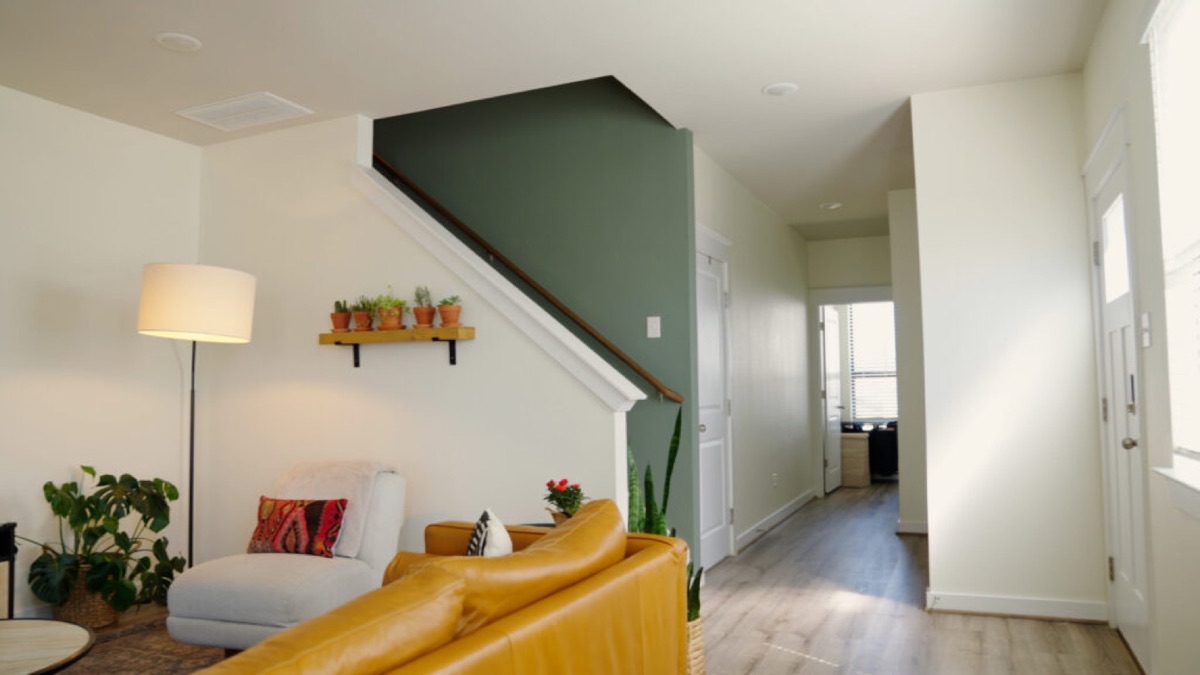
Best pick: Satin Note: side lighting can expose flaws (prep matters)
Kitchen Walls
Best pick: Satin Why: splashes, grease, wipe-downs
Bathrooms
Best pick: Satin (walls) + Semi-gloss (trim) Why: moisture + cleaning; ventilation matters too
Mudroom / Laundry Room
Best pick: Satin Why: dirt, shoes, baskets, constant bumps
Home Office
Best pick: Eggshell Choose satin if: it doubles as a play area or gets bumped often
Paint Finish by Surface Guide
Best Paint Finish for Ceilings
Flat (or ceiling flat)
Best Paint Finish for Interior Walls
Eggshell (most rooms) or Satin (busy rooms)
Best Paint Finish for Trim and Baseboards
Semi-gloss
Best Paint Finish for Doors
Best Paint Finish for Cabinets
Semi-gloss + cabinet enamel (not wall paint)
Eggshell vs Satin: The Fast Wall Decision
If you’re stuck between eggshell and satin:
- Pick satin if the wall gets touched a lot or cleaned often.
- Pick eggshell if you want a softer look or the wall has patches/texture/imperfections.
Simple rule: Eggshell for looks. Satin for life.
Paint Finish Explained: What Sheen Means (And Why It Matters)
Paint finish (sheen) is how shiny paint looks after it dries. More shine reflects more light, which impacts both appearance and performance. Lower sheen hides imperfections better. Higher sheen usually cleans easier and holds up better. You’re always balancing how smooth you want it to look with how tough you need it to be.
Flat Paint Finish (Best for Ceilings and Hiding Flaws)
Flat is the most forgiving finish you can use. It reflects very little light, so it helps surfaces look more uniform, even when the drywall isn’t perfect. That’s why flat is a ceiling favorite: it keeps glare down, hides uneven texture, and doesn’t call attention to roller marks or patched areas. The trade-off is durability. Flat paint tends to scuff easier and doesn’t like aggressive scrubbing, so it’s rarely the best choice for high-touch walls in a lived-in home.
Best uses for flat paint
- Ceilings (most common and best-performing use)
- Low-contact walls in very low-traffic spaces (rare case)
- Rooms where you want the least glare possible
Where flat is usually a bad idea
- Hallways, stairwells, kids’ rooms (scuffs show fast)
- Kitchens and bathrooms (frequent wipe-downs)
- Anywhere you expect fingerprints or rubbing
Pro tips for using flat
- If you have ceiling stains (water, smoke, tannins), use a stain-blocking primer first or the stain can bleed back through.
- For ceilings with lots of light or imperfect texture, flat is your best friend.
- If you’re tempted to use flat on walls because you hate shine, consider eggshell instead since it’s still soft-looking but performs better.
Eggshell Paint Finish (Best All-Around Finish for Most Interior Walls)
Eggshell is the “safe bet” for walls because it sits right in the sweet spot: it looks soft and even in most lighting, hides flaws better than satin, and still cleans up well for normal life. Most homeowners want walls to look smooth (not shiny) and eggshell delivers that calm, finished look without feeling fragile. It’s especially good in older homes or anywhere with patchwork, because it won’t amplify every repair the way shinier finishes can.
Why eggshell works so well
- Softer appearance than satin in bright rooms
- More forgiving on patched or textured drywall
- Still wipeable for everyday marks (with gentle cleaning)
Best places to use eggshell
- Living rooms and family rooms (if they’re not “abuse zones”)
- Dining rooms
- Adult bedrooms
- Home offices
- Older walls with visible repairs or imperfect texture
When eggshell may not be the best pick
- Kids’ rooms and playrooms with constant wall contact
- Hallways and stairwells where people brush past daily
- Kitchens and bathrooms where walls get wiped frequently
Pro tips for eggshell
- Eggshell makes touch-ups easier than satin as long as you keep the same product line and sheen.
- If you want the “least shiny wall that still performs,” eggshell is usually the answer.
- Use eggshell in rooms with big windows if satin tends to look too reflective in your lighting.
Satin Paint Finish (Best for High-Traffic Walls and Easy Cleaning)
Satin is the workhorse finish. It has a noticeable sheen compared to eggshell, but it’s not glossy like trim paint. The reason pros reach for satin in busy areas is simple: it handles fingerprints, scuffs, and repeated wipe-downs better. If you’ve got kids, pets, a narrow hallway, or an open-concept layout where walls get touched constantly, satin often stays cleaner-looking longer. The trade-off is that satin reflects more light, so it can highlight wall texture, patches, and roller marks if prep isn’t solid.
Why homeowners love satin
- Better durability and scrub resistance than eggshell
- Easier to wipe clean (fingerprints, grime, scuffs)
- Helps busy areas look “fresh” longer
Best places to use satin
- Hallways and stairwells
- Kids’ bedrooms and playrooms
- Kitchens (walls)
- Bathrooms (walls)
- Mudrooms, laundry rooms
- High-traffic open-concept living spaces
Where satin can cause regret
- Walls with heavy patchwork or rough drywall (it can “show everything”)
- Rooms with intense natural light if you prefer a soft, low-sheen look
- Large, flat walls where reflection becomes more noticeable
Pro tips for satin
If you want durability without looking too shiny, pick a high-quality paint and use satin only in true high-touch zones.
Satin rewards prep: fill, sand, and feather patches so light doesn’t “catch” them.
Don’t over-roll or overwork it extra passes can create uneven sheen (“flashing”) in certain lighting.
Semi-Gloss Paint Finish (Best for Trim, Doors, and Cabinets)
Semi-gloss is designed for surfaces that get handled, bumped, and cleaned regularly. It cures harder, resists scuffs better, and scrubs clean easier than wall finishes. It also gives trim and doors that crisp “finished” contrast against softer wall sheens. The catch is that semi-gloss reflects a lot of light so it shows surface problems the most. Dings, brush marks, dust, and uneven sanding all stand out more. That’s why semi-gloss looks expensive when prep is great… and looks rough when prep is rushed.
Best places to use semi-gloss
- Baseboards and trim
- Door and window casings
- Interior doors
- Cabinets and built-ins (with the right enamel)
Why semi-gloss is the right choice there
- Most scrubbable and durable common interior sheen
- Handles frequent touching (hands, shoes, bags, cleaning)
- Creates crisp contrast for a clean, professional look
Avoid semi-gloss on
- Large wall surfaces (it can look shiny and highlight flaws)
- Rough drywall or heavily textured walls
- Any surface you’re not willing to prep properly
Pro tips for semi-gloss
- For trim/doors/cabinets, use trim enamel or cabinet enamel, not wall paint.
- Smooth prep = premium look: fill dents, sand smooth, remove dust before painting.
- Respect cure time: paint can feel dry fast but still be soft. Doors and cabinets need time to harden before heavy use.
When to Break the Rules (Real-World Adjustments)
If your walls are heavily patched or textured
Higher sheen shows more. If you hate seeing repairs, go eggshell, even in a busier space, and clean gently.
If you have intense natural light
Sunlight can make satin look shinier than expected. Use eggshell in bright rooms if you want a softer look.
If you clean walls constantly
You’ll usually be happier with satin, just do better prep.
If you want touch-ups to blend better
Touch-ups can flash if sheen changes. Stay consistent with the same sheen and product line, and repaint full walls when possible.
Biggest Paint Finish Mistakes (And How to Avoid Them)
Mixing sheens on the same wall ? looks patchy in certain light Fix: one sheen per surface, repaint full walls after repairs.
Using satin+ on rough drywall without prep ? highlights flaws Fix: eggshell, or do the prep before going shinier.
Using wall paint on trim/cabinets ? wears fast Fix: semi-gloss + proper enamel.
Skipping cleaning in kitchens/baths ? adhesion problems Fix: degrease, rinse, dry, scuff glossy surfaces if needed.
Rushing cure time ? sticky, soft paint Fix: treat doors/cabinets gently until fully cured.
FAQ: Quick Answers Homeowners Actually Want
1.
Is satin paint too shiny for walls?
Usually no, but it can look shinier in bright rooms or on imperfect drywall. If you’re worried about it, use eggshell instead and save satin finish for when you need an easier cleaned surface. 1.
What paint finish is easiest to clean?
Semi-gloss, then satin, then eggshell. Flat is the most difficult to clean. 1.
What paint finish hides imperfections best?
Flat hides best, then eggshell. Satin shows more, semi-gloss shows the most. 1.
What paint sheen should I use in bathrooms?
Satin walls + semi-gloss trim, plus good ventilation. Moisture issues are better solved with airflow than sheen alone.
Want Help Choosing the Best Finish for Your Home?
If you want help choosing the right finish for your lighting, wall condition, and lifestyle contact That 1 Painter today for your free quote.
