By Robert R.
When homeowners refinish cabinets, they obsess over the doors because that’s what everyone sees. But once the kitchen is done, there’s a second question that sneaks up fast.
Overview
Should you paint your cabinet interiors?
In 2026, the real answer isn’t always or never. It comes down to visibility, durability, and what problem you’re trying to solve.
Should you paint the inside of kitchen cabinets?YouTube Embed
Yes, sometimes. Paint your cabinet interiors if they’ll be seen, if you’re making a major color change, or if you need to seal stains or odors. If none of those apply, skipping interiors is completely normal and still looks professional.
If you want the fastest “no-regrets” rule:
- Paint interiors when they’re visible, mismatched with a new light exterior, or you’re sealing problems.
- Skip interiors when they’re hidden behind solid doors and already clean.
- Only paint select areas if you want the upgrade without the full time investment (for example: paint just the cabinet frames and the first several inches inside each box so it looks intentional when opened).
When is painting cabinet interiors worth it?
Paint the interiors if at least one of these is true:
- You’ll see them (glass doors, open shelves, display cabinets)
- You’re going light (dark wood inside plus white doors outside can look unfinished)
- You’re solving a problem (stains, water marks, lingering smells you want sealed in)
If none of that applies, skip it.
One more “worth it” trigger: surface condition. If your interiors are raw wood, MDF, or previously painted and in decent shape, they’re usually great candidates. If they’re slick melamine/laminate, interiors are still possible, but the prep requirement is much higher and shelf wear becomes the biggest risk.
Substrate quick check (interiors)
Raw MDF edges: prime to seal edges first (MDF drinks paint), then topcoat for durability
Bare wood / previously painted: straightforward with proper degrease + scuff + cabinet enamel
Melamine/laminate: doable, but requires stronger adhesion prep + bonding primer; shelves wear fastest
Does painting cabinet interiors add wow factor?
Yes. It’s one of the most underrated ways to make cabinets feel custom. Imagine the look when you open it and have a smooth cabinet paint finish.
Interior cabinet paint is a surprise reveal. When the doors open and the inside looks intentional, the kitchen feels more high-end without changing a single cabinet box.
Here’s why it works:
- It creates a designer reveal. Crisp interiors read like custom cabinetry.
- It makes dishes and decor look better. White dishes pop, glassware looks cleaner, wood tones look warmer.
- It makes the kitchen feel brighter. Light interiors bounce light, so everything feels fresher when doors open.
- It adds personality without risk. You get a signature look without living in a loud color all day.
What are the downsides of painting cabinet interiors?
The biggest downside is wear, especially on shelves.
Painting cabinet interiors isn’t like painting a wall. Shelves get:
- Constant abrasion from plates, cans, and small appliances
- Repeated wiping and cleaning
- Moisture from kitchens and bathrooms
So the finish has to be hard and cleanable, and it has to cure, not just dry. If you want a quick refresher, here’s a clear explanation of dry time vs. cure time.
This is also why interiors fail when the process gets rushed. If you skip the adhesion steps or reload too soon, shelves are where you’ll see sticking, scuffing, and “prints” first. Ensuring you’re properly applying your cabinet paint and then taking care of it during it’s curing time takes care of most of the work for you.
Should you paint your cabinet interiors if you’re changing cabinet color?
If you’re going from stained or dark to white, greige, or muted greens, often yes. That interior contrast is what makes a kitchen feel half done. Painting the interiors removes the mismatch and makes the whole system look intentional.
If you don’t want to commit to every interior surface, a common pro compromise is painting:
Any cabinet interiors behind glass doors or display areas
The cabinet frames and visible edges
The first section inside the cabinet (so it looks finished when doors open)
Should you paint the inside of cabinets to cover stains or smells?
Yes, if the goal is sealing, not just looks.Sometimes the point isn’t style. It’s locking down old water marks, cooking oils, or lingering smells. In those cases, the right prep and primer matter. This is where a shellac-based primer that blocks stains and odors is often the go-to.
If the problem is light discoloration, a good stain-blocking primer is usually enough. If the problem is true odor (smoke, musty, pet), that’s where shellac-based blockers typically earn their keep, because you’re trying to seal, not just cover.
When should you not paint cabinet interiors?
Skip interior painting if:
- You have standard solid doors and the inside won’t be seen much
- The interiors are slick laminate or melamine and it’s going to be more work than it’s worth
- You need speed and minimal disruption (interiors add time because they’re enclosed and fussy)
Skipping interiors can still look professional when the exterior finish is done right.
Also: if your shelves take constant heavy abuse (stacks of ceramics, appliances sliding in/out daily), painting is still possible, but only if you’re willing to respect prep and cure time, and ideally add protection like shelf liners after curing.
What paint is best for cabinet interiors?
Use cabinet or trim enamel, not wall paint.Interiors need a coating built for scrubbing and wear. Cabinet-grade enamels cure harder and clean easier than typical wall paint. If you want a benchmark example, Emerald Urethane Trim Enamel is built for doors, trim, and cabinets that take frequent use.
Do you need primer inside cabinets?
Usually yes. Prime with intention:
- Normal, clean wood: adhesion-focused primer plus proper scuff sanding
- Stains and odors: stain-blocking primer before your finish coats
And if you’re dealing with tricky interiors (common in 1990s/2000s kitchens): melamine/laminate needs an adhesion plan, thorough degreasing, scuffing, and a bonding primer; otherwise shelves and cabinet bottoms are where paint is most likely to scratch or peel.
This is what keeps interiors from turning into a sticky, scuffed mess.
When can you put dishes back after painting cabinet interiors?
This is the number one way people ruin the finish.
Here’s how cabinet interiors get wrecked:
- Paint feels dry
- You put everything back
- Shelves stick, scuff, or print into the finish
Dry to the touch isn’t the same as ready for dishes. Let the coating fully cure before reloading, especially on shelves. If you want a more technical explanation, here’s a solid reference on dry time vs. cure time.
If you want a practical homeowner rule:
- Light, careful use can sometimes happen after a couple days depending on product/humidity.
- For shelves with plates/cans/appliances, plan on about 7–14 days before heavy reloading for best results.
Pro tip: once cured, shelf liners help reduce abrasion and keep the finish looking newer longer. Felt or fabric-style liners are usually gentler; ultra-grippy rubbery liners can “grab” fresh finishes and cause sticking/printing if you rush the cure.
What interior cabinet paint colors look the most custom?
Use one of these three plays:
Clean custom look
- Doors: white or soft greige
- Interiors: same color, fresh and uniform
Result: looks brand new and expensive.
Designer contrast look
- Doors: white
- Interiors: muted green, slate blue, or warm mushroom
Result: the surprise feels intentional and high-end.
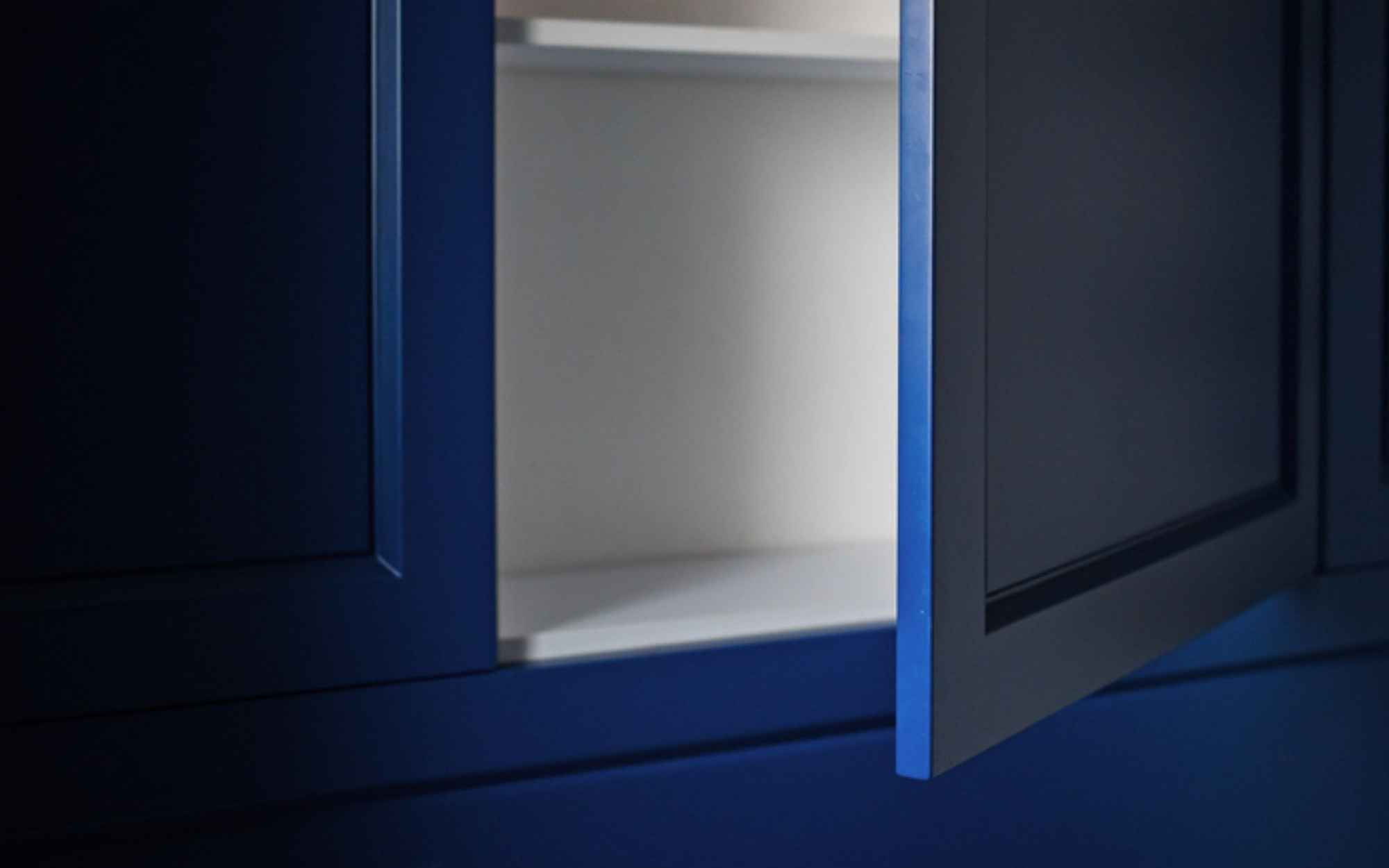
Moody luxury look
- Doors: charcoal, navy, or deep green
Interiors: lighter neutral Result: dramatic outside, bright inside.
Final answer: Should you paint your cabinet interiors?
Paint the interiors if they’re visible, you’re doing a major color change, you want that wow reveal, you need to seal stains or odors, or you just want to.
If they’re hidden behind solid doors and already clean, you can skip them and still get a professional, high-end result.
Ready for a flawless cabinet finish without sticky shelves or chipped corners? Contact That 1 Painter today for your free quote.
