By Ben M.
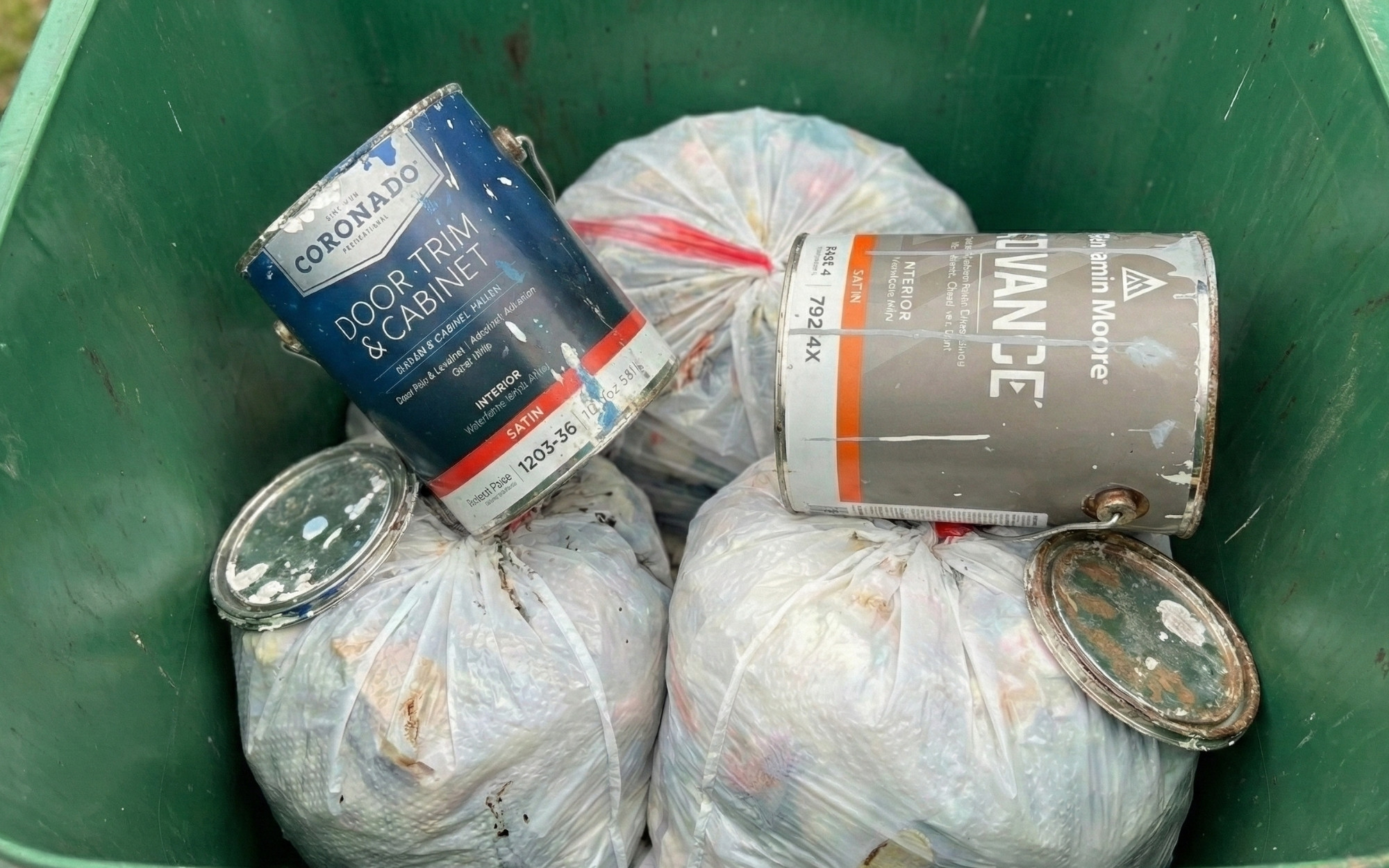
You have a full stack of old paint can’t and aren’t sure how to actually get rid of old paint.
Overview
First rule: don’t pour paint down the drain, into a storm sewer, or “thin it out” and hope it disappears. We have one Earth, we have to take care of it and paint can pollute.
The good news is that getting rid of old paint is usually simple once you know what type you have. This guide walks you through it step by step, with the easiest options first.YouTube Video Embed
Quick Answer
Do not pour paint down a drain or put liquid paint in the trash. If it is water-based paint (often called latex and labeled “soap and water cleanup”), use it up, donate it if it is still usable, or dry it fully solid before disposal. If it is oil-based, solvent-based, spray paint, stain, varnish, or unknown, take it to a household hazardous waste or PaintCare drop-off site.
Identify What Kind of Paint You Have
Before you do anything, read the label. The cleanup instructions are your fastest clue:
- If it says “soap and water cleanup,” it is usually water-based paint (often called latex).
- If it says “mineral spirits,” “paint thinner,” or “solvent cleanup,” it is usually oil-based (alkyd) or a solvent product.
- If the can is missing a label or you are still unsure, treat it like oil-based and take it to a proper drop-off site to be safe.
Don’t Throw Out Liquid Paint
Even if it is water-based, most trash services and local rules say the same thing: liquid paint should not go in the trash.
Your safe options are:
- Use it up
- Donate it if it is still good
- Dry it out fully solid (water-based only)
- Use a proper drop-off site (oil-based, stains, varnishes, aerosols, unknowns)
Dry Out Water-Based Paint
Water-based paint is the one that’s usually easiest to handle at home.
Option A: Use It Up
If you have a small amount left:
- Touch up baseboards, doors, closets, or the garage.
- Paint the inside of utility closets.
- Save a little for future nail-hole repairs.
Option B: Donate It If It Is Still Good
Many communities have reuse centers, donation programs, or neighbors who will take usable paint. This is most common for:
- unopened cans
- partial cans that are clean and labeled
Option C: Dry It Out and Throw It Away
If you are disposing of water-based paint, the goal is to solidify it all the way through.
Here is how:
- Pop the lid and set the can in a well-ventilated area away from kids and pets
- Mix in a paint hardener or an absorbent like kitty litter
- Stir until it is thick, then leave it open to dry
- Wait until it is fully solid all the way through, not just a crust on top
- Once solid, most areas allow it to go in the trash, but always follow local rules
Fast tip: If you have a lot of paint, pour it into a cardboard box lined with a trash bag, add litter or hardener, and let it cure into a solid block.
What About the Empty Paint Can?
If the paint can is completely empty and dry, many areas allow it in the trash or metal recycling. Check your local recycling rules because some programs accept metal paint cans and some do not.
Take Oil-Based and Unknown Old Paint to a Drop-Off Site
Oil-based paint and most solvent-based coatings require special handling. Same goes for:
- oil-based primers
- stains and varnishes
- spray paint
- unknown cans with no label
- anything that smells strongly like solvent
Best practice: Take these to a household hazardous waste (HHW) facility or a PaintCare drop-off site. PaintCare operates drop-off programs in many states and has a locator tool to find a participating site near you so you can dispose of old paint safely.
PaintCare sites are often paint retailers or partnered HHW facilities, so you can usually drop off leftover paint without guessing.
Google the closest hazardous waste site near you if you’re unsure, then confirm hours and limits before you drive over. Some locations require appointments, have quantity limits, or charge small fees for certain items.
What Not to Do With Old Paint
Avoid these common mistakes:
- Do not pour paint down sinks, toilets, storm drains, or gutters
- Do not throw away liquid paint in curbside trash
- Do not burn paint or paint-soaked materials
- Do not mix unknown products together, especially solvents
If you are unsure, treat it like hazardous waste and drop it off at the proper disposal site.
Quick Cheat Sheet: How to Handle Each Type of Old Paint
Water-Based Paint (Latex) Use it up, donate it, or dry it out solid and dispose per local rules.
Oil-Based Paint (Alkyd) and Solvent Products Household hazardous waste or PaintCare drop-off.
Stain, Varnish, Polyurethane Usually household hazardous waste or PaintCare.
Spray Paint Typically household hazardous waste. Some PaintCare sites accept it depending on local program rules.
Unknown Paint in an Unmarked Can Treat as hazardous and drop it off.
Bonus Tip: You Might Still Be Able to Use Old Paint
You don’t automatically have to get rid of old paint. You can often still use it if it passes a few simple checks like:
- it mixes back smooth (no chunky bits)
- it doesn’t smell sour or rotten
- it applies evenly without grit
1.
FAQ: Old Paint Disposal
Can I throw away water-based paint if it is thick but not fully solid?
No. It needs to be fully solid all the way through, not just dried on top. If it is still soft underneath, keep drying it with hardener or absorbent until it turns into one solid mass.
How do I tell if paint is oil-based if the label is missing?
Treat it as oil-based to be safe. If you cannot confirm soap and water cleanup, assume it needs hazardous disposal and take it to a proper drop-off site.
Can I recycle empty paint cans?
Sometimes. If the can is completely empty and dry, some programs accept it as scrap metal and some do not. Check local recycling rules before you toss it in a bin.
Can I donate opened paint?
Often yes, as long as it is clean, usable, and clearly labeled. Many reuse centers accept partial cans if they are not contaminated and have enough volume to be useful.
What should I do with spray paint and aerosol cans?
Most areas treat these as household hazardous waste. Some PaintCare programs accept them depending on local rules, so check before you drop them off.
How long does it take to dry out water-based paint?
It depends on volume, airflow, and temperature. Small amounts can dry in a few days. Larger amounts take longer unless you mix in hardener or absorbent.
Final Verdict
If the can says soap and water cleanup, treat it as water-based paint. Use it up, donate it, or dry it fully solid before disposal. If it says solvent cleanup, smells like solvent, or the label is missing, do not guess. Treat it as hazardous and take it to a household hazardous waste or PaintCare drop-off site.
Need help finishing a project so you do not end up with leftover paint in the first place, or want a pro to handle the prep and cleanup? Contact That 1 Painter today for your free quote.
