By Mary C.
When starting a home painting project, the first thing most people reach for is a multi-pack of blue painter’s tape. However, if you watch a professional crew in action, you’ll often see them leave the tape in the truck while consistently delivering clean paint lines. This leads to a common question for homeowners: Do I actually have to use painter’s tape to get a professional finish?
Overview
The answer depends on experience level, tool quality, and the specific “lines” being created. To maximize a home’s aesthetic appeal and market value, it is essential to understand the science behind the “cut-in” versus the “mask.”
Quick Decision Guide: Should You Use Tape?YouTube Embed
Use painter’s tape if you are doing any of these
- Painting a dark wall next to a bright white ceiling or trim
- Working near high-value surfaces like hardwood floors, stone, or premium carpet
- Spraying cabinets, built-ins, doors, or trim with an HVLP sprayer
- Painting around textured walls where freehand lines are harder to keep crisp
- You are a weekend warrior and want an insurance policy while you build skill
Skip tape and cut in by hand if all of these are true
- You have a quality angled sash brush and decent brush control
- You are painting lower-contrast transitions, like off-white wall to warm white ceiling
- Your surfaces are relatively smooth and your trim edge is clean
- You want the fastest workflow with fewer masking steps
The Pro Secret: Why Professional Painters “Cut In” by Hand
Most professional painters prefer to “cut in” without tape. This isn’t just about showing off a steady hand; it’s about the physics of how paint interacts with a surface.
The “Bleed” Phenomenon Even the most expensive tape can have microscopic gaps, especially on textured “orange peel” or knockdown drywall. Capillary action can pull wet paint under the tape’s edge, creating a jagged, blurry line. This is often harder to fix than a minor freehand slip because the “bleed” must be sanded down before repainting to ensure a smooth transition. Understanding these common technical errors is the first step in avoiding a costly rework.
Surface Integrity In 2026, many homes feature high-performance, low-sheen finishes. Tape adhesive if left on too long or applied to “green” (fresh) paint can cause delamination. This is the process of pulling the previous layer of paint or the delicate drywall paper off the wall entirely upon removal.
The Long-Stroke Method Professionals utilize high-quality angled sash brushes. By fanning out the bristles and using a continuous, fluid motion, they create a natural guide along the ceiling or trim that tape simply cannot replicate.
When Tape is a Critical “Insurance Policy”
Despite the skill involved in hand-cutting, there are high-stakes scenarios where masking is a technical necessity.
Protecting high-value substrates
While a smudge can be wiped off a baseboard, removing a paint drip from premium flooring or carpet can be nearly impossible. In these cases, tape plus masking paper creates a necessary splash zone.
High-contrast color drenching
Current design trends favor bold transitions. If painting a dark charcoal wall against a bright white ceiling, the human eye is hypersensitive to even a 1 mm wiggle. Painter’s tape provides the mechanical precision needed for these bold architectural statements. Clean paint lines create the transition needed between the bold elements.
HVLP spraying
When refinishing kitchen cabinets or built-ins using HVLP sprayers, paint is atomized into a fine mist. This requires a total lockdown of the room, masking every square inch that isn’t being painted to prevent overspray.
The 2026 Material Analysis: Not All Tapes are Created Equal
For those who choose to use tape, the “blue roll” is just the beginning. The industry has seen a surge in specialized polymer tapes designed for specific outcomes.
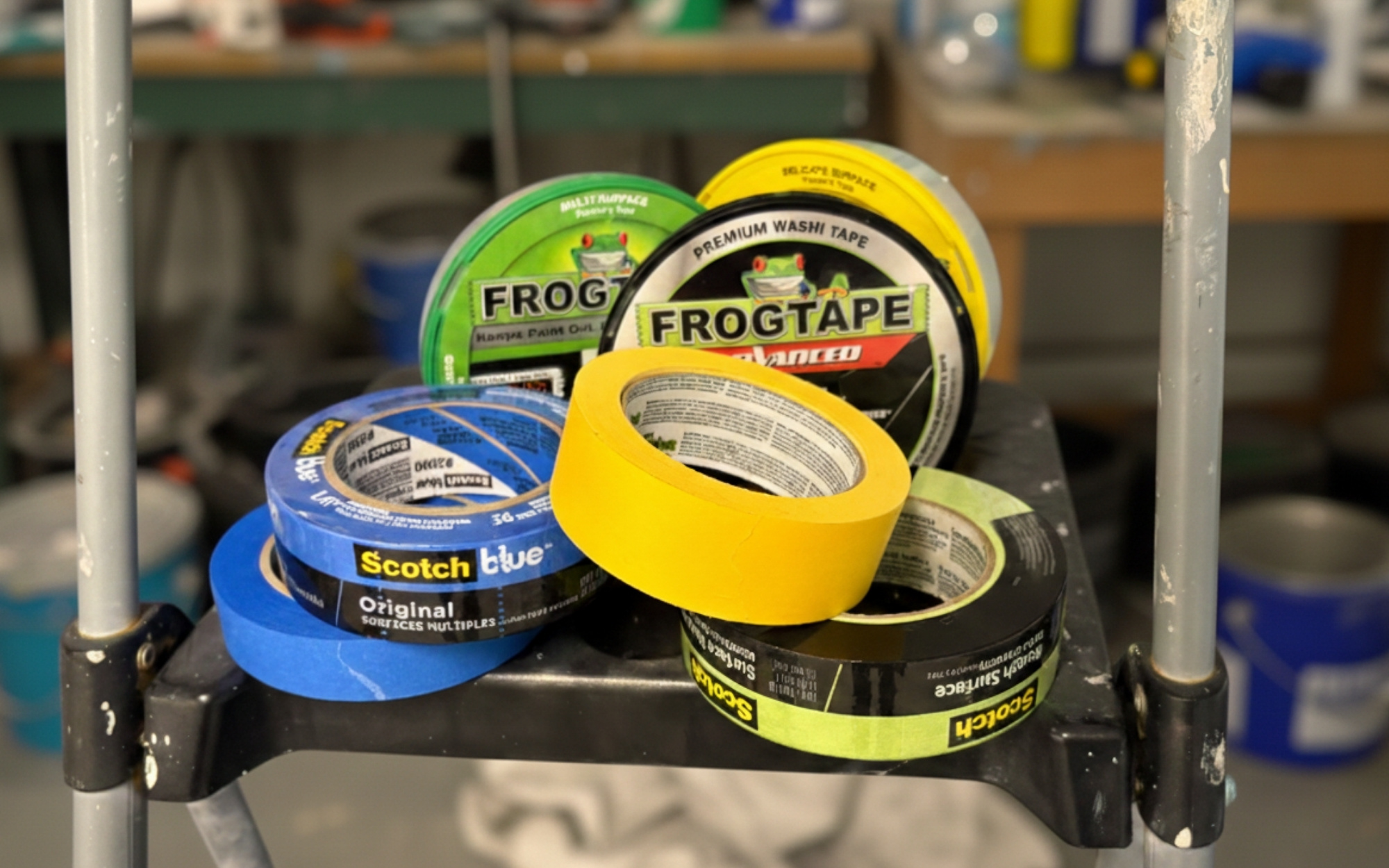
Washi “Edge-Lock” Technology
This is the current gold standard. Unlike traditional crepe paper tape, Washi tape is made from ultra-thin Japanese rice paper. It features a lower profile that prevents “paint bridging”, the process where paint dries across the tape and the wall. Many brands now include a proprietary polymer technology that turns into a microscopic gel when it touches water-based paint, creating a literal vacuum seal.
Adhesion Gradation
- Green tape: high-tack for exterior brick, stone, or stucco
- Blue tape: medium-tack for cured interior walls, typically 30 days old
- Purple or yellow tape: ultra-low tack for delicate surfaces or fresh paint
Using the wrong tack is a leading cause of DIY surface damage.
How to Get Razor-Sharp Lines With Painter’s Tape
Tape can produce crisp edges, but only if you treat it like a system, not a shortcut. Get clean paint lines by following these steps.
Step 1: Prep the edge
Dust and grease are tape’s enemy. Wipe the edge with a clean, dry microfiber cloth. In kitchens or near handrails, use a mild cleaner and let it dry fully.
Step 2: Apply tape without stretching
Lay it down gently. If you stretch tape, it tries to lift back up and creates micro gaps.
Step 3: Seal the edge
This is the pro move that stops bleed.
- Paint a very thin pass of the base color along the tape edge, then let it dry
- Or use a clear acrylic sealer if appropriate for the surface
When you apply your new color, it has far less chance of sneaking under the tape.
Step 4: Press the edge firmly
Use a putty knife, a 5-in-1 tool, or a plastic card to burnish the edge. Focus on the paint line side, not the center of the tape.
The “Wet Pull” Rule: The Science of Removal
The most critical stage of the process happens after the paint is applied. A common mistake is leaving the tape on until the project is completely finished. Adhering to industry standards for coating application ensures that the bond between the substrate and the finish remains intact during the unmasking process.
The Physics of the Paint Bridge
As paint dries, it forms a continuous plastic-like film. If the paint dries over the edge of the tape, pulling the tape will tear that film, leading to jagged edges or “peeling chunks.”
Tape should be removed while the paint is still slightly damp (tacky to the touch). By pulling the tape back at a sharp 45-degree angle away from the line, the tension of the paint is broken while it is still flexible, resulting in a factory-sharp edge. The professional technique
The Professional Technique
Remove tape while the paint is still slightly damp, tacky to the touch.
- Pull tape back at a sharp 45-degree angle away from the line
- Go slow and consistent
- If you feel resistance or see bridging, score the edge lightly with a sharp utility knife before continuing
Tools That Make Precision Edging Easier
Minimum kit for clean cut-ins
- 2-inch angled sash brush
- Small 1.5-inch angled sash brush for tight areas
- Paint pail or cut bucket
- Microfiber cloths for dust control
- Sanding sponge, fine grit
- Putty knife or 5-in-1 tool for pressing tape edges
Masking and protection kit
- Painter’s tape matched to the surface
- Masking paper and dispenser
- Plastic sheeting for cabinets and furniture
- Drop cloths for floors
Why Precision Lines Matter for Home Value
Real estate data suggests that “cleanliness of finish” is a top factor in a buyer’s perception of home maintenance. Much like the “halo effect” seen in kitchen renovations, perfectly straight lines where the wall meets the ceiling lead buyers to subconsciously assume the home’s unseen systems like plumbing and HVAC, have been equally well-maintained. According to Zillow’s paint color and home value analysis, visual cleanliness and color choice are pivotal in driving higher offer prices. Jagged or bleeding lines signal a “rushed” renovation, which can decrease the perceived value of a home by thousands during a professional inspection.
Final Verdict: To Tape or Not to Tape?
If you are a weekend warrior, painter’s tape is your best friend. It provides the safety net required to handle modern, high-contrast colors and give you extremely clean paint lines every time. However, it is no substitute for the precision and efficiency of a professional hand.
If you want the “hand-cut” look that defines a luxury interior without the hours of tedious masking, it is often best to call in the experts.
Ready for a flawless finish? Contact That 1 Painter today for your free quote!
