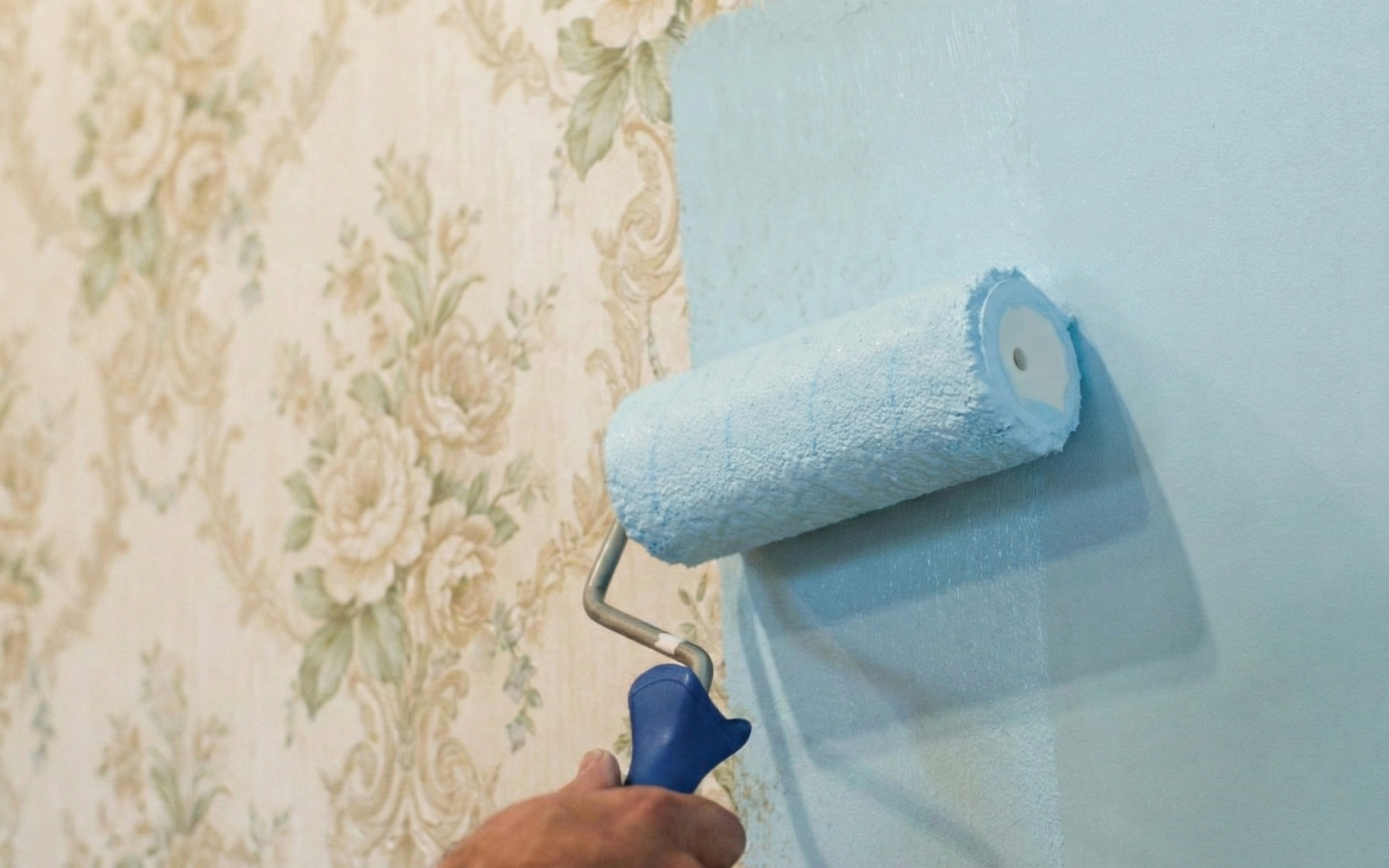
Yes, you can paint over wallpaper, but only if it is smooth, fully adhered, and structurally stable.
If the wallpaper is lifting at the seams, bubbling, cracking, or separating from the wall, painting over it will fail. The movement underneath will transfer directly into your new paint as peeling, splitting, or visible ridges.
The real question is not “Can you?”
It is “Should you?”
Here is the fast decision guide first, then the deeper breakdown.
Quick Answer: Should You Paint Over Wallpaper?
Paint over wallpaper only if it is flat, tight to the wall, and free of moisture damage. Seal loose seams, apply a moisture-blocking primer, then paint in thin coats.
If you see bubbling, widespread seam failure, cracking, or multiple layers, removal is the better long-term choice.
Why Homeowners Want to Paint Over Wallpaper
Wallpaper removal is messy, time-consuming, and sometimes damaging to drywall. Many homeowners want to avoid:
- Steamers and scraping
- Tearing drywall paper
- Skim coating entire rooms
- Extended project timelines
In certain situations, painting over wallpaper is completely reasonable.
In others, it simply delays a larger repair.
Understanding the difference is what protects your investment.
5 Checks to Know If You Can Paint Over Wallpaper
Before opening a can of primer, run these five checks.

1. Check the Wallpaper Seams
Inspect every wallpaper seam closely.
If seams are completely flat and bonded with no lifting edges, you can proceed.
If seams are curling, separating, or uneven, painting will make them more visible and more likely to fail.
2. Check for Bubbles in the Wallpaper
Press gently across the surface.
If the wall feels solid and smooth, it may be paint-ready.
If you feel air pockets, soft spots, or raised blisters, the paper has already separated from the drywall.
Paint does not fix separation.
3. Look for Signs of Moisture on the Wallpaper
Look for stains, discoloration, or soft drywall underneath.
Moisture is a major cause of wallpaper failure. Painting over trapped moisture can cause peeling and long-term damage.
If moisture is present, correct the source before doing anything else.
4. Check for Extreme Wallpaper Textures
Run your hand across the wall.
Embossed or textured wallpaper will show through paint. If you want a smooth, modern finish, heavily textured wallpaper typically needs removal or skim coating first.
Flat wallpaper performs best.
5. Check for Wallpaper Layers
Check edges near outlets or corners.
If you see multiple layers of wallpaper, painting over them adds weight and increases failure risk. Multiple layers usually mean removal is the correct professional move.
Condition determines durability. Paint only performs as well as the surface beneath it.
Why Painting Over Wallpaper Sometimes Fails
Most failures happen because homeowners assume paint will “lock everything down.”
It will not.
Paint introduces moisture during application. That moisture can:
- Reactivate old adhesive
- Expand trapped air pockets
- Loosen brittle paper
- Expose weak drywall underneath
If the wallpaper is already compromised, paint accelerates the problem.
The finish coat only performs as well as the substrate below it.
When Should You Paint Over Wallpaper?
There are cases where painting is reasonable and durable.
The Wallpaper Is Firmly Bonded
No movement. No seam separation. No bubbling.
If the adhesive bond is intact, you can build a stable paint system over it.
The Surface Is Smooth
Smooth wallpaper allows primer and paint to lay evenly without telegraphing patterns.
You Want to Avoid Drywall Damage
In some homes, aggressive wallpaper removal can damage drywall facing. If the paper is stable, sealing and painting can be less invasive.
When Should You Remove Your Wallpaper?
Removal is not always required, but sometimes it is the only long-term solution.

Remove the wallpaper if:
- More than 20 to 30 percent of seams show lifting
- Bubbles reappear after pressing them down
- The wallpaper is thick vinyl and peeling
- The paper is brittle and cracking
- You see signs of moisture damage
- Multiple layers are installed
Painting over failing wallpaper does not eliminate the problem. It delays it and can cause you more headache in the long run.
How to Paint Over Wallpaper in 4 Steps
If your wallpaper passes inspection, prep determines whether the finish lasts years or fails early. Following the proper steps closely ensures your paint lasts much longer and doesn’t simply fall apart.
1. Reattach and Seal Loose Seams
Use wallpaper seam adhesive to secure any lifting edges.
Press firmly, remove excess glue, and allow full cure time. Even slight seam movement will show through paint.
This step stabilizes the weakest points in the system.
2. Clean the Surface Without Soaking It
Use a mild cleaner and damp cloth to remove dust, grease, and residue.
Do not oversaturate the wall. Excess water can soften adhesive beneath the surface.
Allow the wall to dry completely before priming.
3. Apply a Moisture-Blocking Primer
This is the most critical step.
Standard latex primer contains enough water to reactivate wallpaper glue.
Instead use:
These create a barrier that locks in the wallpaper and prevents moisture migration.
Professionally, this step separates successful projects from peeling ones.
4. Apply Two Thin Coats of Paint
After primer fully cures, apply two thin coats of high-quality interior paint.
Avoid:
- Heavy roller pressure
- Overly wet application
- Flooding seams with excess paint
Controlled application minimizes stress on the underlying adhesive.
Durability comes from restraint, not saturation.
Common Mistakes That Lead to Peeling
Most paint-over-wallpaper failures stem from these errors:
- Skipping primer
- Using only latex primer
- Ignoring minor bubbling
- Applying heavy, saturated coats
- Painting over textured wallpaper expecting it to disappear
Paint is cosmetic. Stability comes from preparation.
FAQs About Painting Over Wallpaper
Can you paint over vinyl wallpaper?
Yes, but only if it is fully adhered and properly cleaned. Vinyl surfaces require a bonding or oil-based primer to ensure adhesion.
Will wallpaper seams show through paint?
They often remain faintly visible, even when properly sealed. If seams are raised before painting, they will be more noticeable afterward.
What is the best primer for painting over wallpaper?
Oil-based or shellac-based primer performs best because it blocks moisture from reactivating adhesive.
How long does painted wallpaper last?
If properly prepped and primed, it can last for years. If the wallpaper is unstable, paint failure can appear quickly.
Is it cheaper to paint over wallpaper instead of removing it?
Short term, yes. Long term, only if the wallpaper is structurally sound. If failure occurs, you will pay for removal and repainting later.
Does painting over wallpaper affect home resale?
Visible seam lines, bubbling, or uneven texture can negatively impact buyer perception. Smooth finishes typically present better in resale situations.
The Simple Rule
If the wallpaper is smooth, tight, and structurally sound, painting over it is acceptable with proper primer and controlled application.
If it is lifting, bubbling, cracking, layered, or moisture-damaged, removal is the correct move.
If you are unsure whether your wallpaper is stable enough to paint, That 1 Painter can assess it and give you a clear recommendation. Contact That 1 Painter today for a free estimate and expert guidance on your interior painting project.